



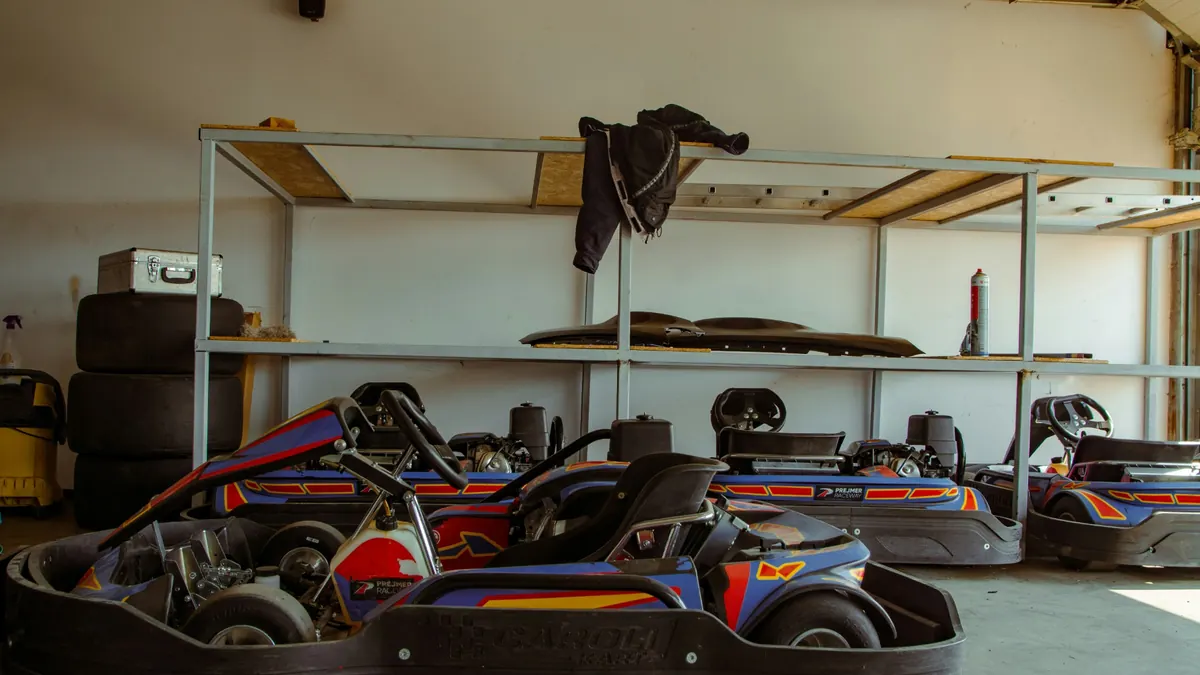
For karting enthusiasts in Québec and other regions with cold winters, the end of the racing season brings an important responsibility: preparing your kart for storage.
A racing kart that sits unused for several months can develop problems if it is not stored correctly. Fuel can deteriorate, moisture can affect metal components, tires can become damaged, and neglected mechanical issues may become more difficult to address when the next season begins.
Proper racing kart winter storage helps protect your investment, reduce unnecessary repairs and make the transition back to the track easier.
Whether you own your first racing kart or have been competing for several seasons, following a consistent off-season storage routine is an important part of kart ownership.
This guide explains how to prepare your kart for winter, protect its major components, choose an appropriate storage location and inspect it before returning to the circuit.
1. Why Proper Racing Kart Storage Matters
Racing karts contain mechanical components that can deteriorate during extended periods of inactivity.
Even when a kart is not being driven, changes in temperature, humidity and storage conditions can affect its condition.
Common risks include:
- Corrosion on exposed metal components.
- Deterioration of fuel.
- Damage to tires.
- Moisture accumulation.
- Battery discharge, where applicable.
- Damage caused by rodents or pests.
- Deterioration of seals, hoses or other components.
- Mechanical problems that remain undetected until spring.
A good storage routine helps reduce these risks.
For owners in Québec, winter preparation is particularly relevant because outdoor karting activity is seasonal at many circuits.
The goal is not simply to park the kart until spring. It is to leave the equipment in a condition that supports safe and reliable operation when the season resumes.
2. Start With a Thorough End-of-Season Inspection
Before placing your kart in storage, inspect its overall condition.
This is an opportunity to identify problems while the details of your most recent sessions are still fresh.
Check the following areas:
- Chassis and frame.
- Steering system.
- Brake components.
- Engine.
- Chain and sprockets.
- Rear axle.
- Wheels and tires.
- Fuel system.
- Electrical components, if equipped.
- Bodywork and mounting points.
Look for cracks, loose components, leaks, unusual wear and signs of damage.
Record any problems that need attention.
Repair now or wait until spring?
Some repairs can be completed during the off-season, when there is less pressure to prepare for an upcoming race.
However, certain components may require professional assessment or manufacturer-specific procedures.
Do not postpone safety-critical repairs without clearly documenting them and ensuring the kart is not returned to service before the problems are resolved.
For more information on routine inspections, refer to our guide on maintaining a racing kart.
3. Clean the Kart Before Storage
A thorough cleaning is one of the simplest and most useful winter preparation tasks.
Dirt, rubber debris, grease and other contaminants can hide wear or damage.
Remove accumulated debris
Clean accessible areas of the chassis, bodywork and mechanical components using products appropriate for the materials.
Pay particular attention to areas where dirt accumulates.
Avoid excessive water exposure
High-pressure washing can force moisture into bearings, electrical connectors and other sensitive components.
Use cleaning methods recommended by the manufacturer.
Dry the kart completely
Before storing the kart, make sure cleaned components are dry.
Trapped moisture can contribute to corrosion.
Inspect while cleaning
Cleaning provides another opportunity to identify:
- Cracked bodywork.
- Loose fasteners.
- Worn chains.
- Damaged cables.
- Fluid leaks.
- Corrosion.
- Unusual tire wear.
A clean kart is easier to inspect when the new season begins.
4. Prepare the Engine for Winter Storage
The engine is one of the most valuable components of a racing kart.
Its storage requirements depend on its design and manufacturer.
Two-stroke racing engines
Depending on the engine, winter preparation may involve:
- Fuel system preparation.
- Inspection of the spark plug.
- Protection of internal components.
- Cooling system maintenance, where applicable.
- Checking hoses and connections.
- Completing scheduled servicing.
Some engines require specific procedures to protect internal surfaces during long periods of inactivity.
Follow the engine manufacturer’s instructions rather than applying a generic procedure.
Four-stroke racing engines
Depending on the model, preparation may include:
- Changing the engine oil.
- Preparing the fuel system.
- Inspecting the air filter.
- Checking the spark plug.
- Inspecting hoses and seals.
- Completing recommended maintenance.
Not all four-stroke engines require identical procedures.
Avoid unnecessary engine operation
Starting an engine briefly without bringing it through an appropriate operating cycle may not provide the protection owners expect.
Follow manufacturer recommendations concerning operation during storage.
Consider professional servicing
The off-season can be a convenient time to arrange scheduled engine maintenance or rebuilding.
For an overview of engine types, read Types of Go-Karts Explained: Rental, 4-Stroke, 2-Stroke & Electric Karts.
5. Manage Fuel Correctly Before Storage
Fuel management is an important part of winterizing a racing kart.
Fuel can deteriorate during extended storage, and certain fuels or fuel mixtures require special handling.
Follow engine-specific guidance
Some manufacturers recommend draining particular fuel-system components, while others specify different storage procedures.
The correct approach depends on:
- Engine type.
- Fuel type.
- Whether the engine uses premixed fuel.
- Fuel-system design.
- Expected storage duration.
Do not assume that the same procedure applies to every kart.
Store fuel safely
Fuel must be handled and stored in accordance with applicable safety requirements.
Use approved containers and appropriate storage locations.
Never store fuel near ignition sources or in unsuitable indoor spaces.
Dispose of unwanted fuel responsibly
Do not pour fuel into drains, onto the ground or into household waste.
Follow local hazardous-waste disposal requirements.
6. Protect the Cooling System
Some racing kart engines use liquid cooling systems.
If your kart has one, winter preparation must account for the possibility of freezing temperatures.
Check the manufacturer’s requirements
The appropriate storage procedure depends on the engine and cooling-system design.
Some racing organizations restrict the types of coolant permitted during competition, which can affect how the system should be prepared for winter.
Avoid freezing damage
Water left in an unprotected cooling system may freeze and expand, potentially damaging components.
Follow the manufacturer’s instructions for draining, protecting or otherwise preparing the cooling system.
Inspect hoses and connections
Check for:
- Cracks.
- Leaks.
- Loose clamps.
- Damaged hoses.
- Corrosion.
If you are uncertain about the correct procedure, consult a qualified kart mechanic.
7. Protect the Chain, Sprockets and Rear Axle
The drivetrain contains metal components that may be vulnerable to corrosion during storage.
Inspect the chain
Check for wear, damage and corrosion.
Clean and protect the chain using suitable products and manufacturer recommendations.
Inspect the sprockets
Look for worn or damaged teeth.
Replace components when necessary rather than leaving known problems for the next season.
Check the rear axle
Inspect the axle and accessible bearing areas for damage or corrosion.
Avoid applying lubricants or protective products to components where they are not recommended.
Keep contaminants away from brakes
Take care that chain lubricants and corrosion-protection products do not contact brake discs, pads or tires.
8. Store Kart Tires Properly
Tires require attention during long periods of inactivity.
Poor storage conditions can contribute to deterioration or deformation.
Avoid prolonged exposure to sunlight
Ultraviolet light and excessive heat can contribute to rubber deterioration.
Choose an appropriate environment
Follow the tire manufacturer’s recommendations concerning:
- Temperature.
- Humidity.
- Light exposure.
- Contact with chemicals.
- Storage position.
Consider using a kart stand
A suitable kart stand can reduce prolonged loading on the tires during storage.
Ensure the kart is stable and properly supported.
Inspect tires before reuse
Before returning to the track, check for cracks, deformation, deterioration and other damage.
Do not assume that a tire is safe because it was usable at the end of the previous season.
9. Inspect and Protect the Brake System
Brake components are essential to safety and should be inspected before storage.
Check:
- Brake pads.
- Brake disc.
- Caliper.
- Hydraulic lines.
- Connections.
- Brake fluid condition.
- Pedal operation.
Look for leaks and visible corrosion.
Brake fluid maintenance
Some braking systems require periodic fluid replacement according to the manufacturer’s recommendations.
Use only the specified fluid and procedures.
Avoid contaminating the brakes
Do not apply oil, grease or general corrosion-protection products to braking surfaces.
Any suspected braking problem must be resolved before the kart returns to the track.
10. Choose the Right Storage Location
The storage environment can make a significant difference in the condition of your kart.
Indoor storage is generally preferable
A clean, dry and secure indoor location can help protect the kart from precipitation, sunlight and temperature extremes.
Possible options include:
- A private garage.
- A suitable workshop.
- A secure kart storage facility.
- An appropriate motorsport storage space.
Control moisture
High humidity can encourage corrosion.
Avoid locations with persistent condensation, water leaks or excessive dampness.
Consider temperature changes
Unheated garages may be suitable for certain equipment, but freezing temperatures require additional precautions for engines, cooling systems, batteries and other components.
Keep the area secure
Store the kart where it is protected from accidental impacts, unauthorized access and falling objects.
11. Should You Cover Your Racing Kart?
A suitable cover can help protect the kart from dust and incidental contamination.
However, the cover must be appropriate for the storage environment.
Use a breathable cover when appropriate
A cover that traps moisture may contribute to condensation and corrosion.
Choose a solution that allows moisture to escape while providing reasonable protection.
Never cover a wet kart
Ensure the kart is clean and dry before covering it.
Avoid placing heavy objects on the kart
The kart should not be used as a storage shelf.
Heavy objects can damage bodywork, steering components or other parts.
12. Protect Electrical Components and Batteries
Some racing karts use batteries, electronic ignition components, data loggers or other electrical equipment.
Storage requirements vary by system.
Batteries
If your kart has a battery, follow the battery manufacturer’s storage and charging instructions.
Some battery types require periodic charging or a compatible maintenance charger.
Other battery technologies have different requirements.
Do not use an incompatible charger.
Electronic equipment
Protect electronic devices from moisture, extreme temperatures and physical damage.
Remove and store detachable equipment separately when recommended by the manufacturer.
Inspect wiring
Check for damaged insulation, loose connections and corrosion.
13. Prevent Damage From Rodents and Pests
Garages, sheds and storage facilities may attract rodents, particularly during colder months.
Rodents can damage wiring, hoses, seat materials and other components.
To reduce risks:
- Keep the storage area clean.
- Avoid storing food nearby.
- Inspect the area periodically.
- Use appropriate pest-prevention measures.
- Check the kart for signs of activity.
Be careful when selecting pest-control products, particularly around children, pets and sensitive equipment.
14. Create an Off-Season Maintenance Plan
Winter can be an excellent time to complete maintenance that is difficult to schedule during the racing season.
Potential tasks include:
- Scheduled engine servicing.
- Brake inspection.
- Bearing replacement, if needed.
- Chassis inspection.
- Replacement of worn drivetrain components.
- Inspection of steering components.
- Cleaning and organization of spare parts.
- Review of maintenance records.
Not every component needs to be replaced simply because the season has ended.
Base your decisions on condition, operating hours, manufacturer recommendations and qualified mechanical advice.
15. Racing Kart Winter Storage Checklist
Use the following checklist alongside your equipment manufacturer’s instructions.
Before storage
- Inspect the entire kart.
- Record mechanical problems.
- Clean the kart.
- Dry all components.
- Prepare the engine according to the manufacturer.
- Manage fuel appropriately.
- Prepare the cooling system, if equipped.
- Inspect and protect the drivetrain.
- Check brakes.
- Inspect tires.
- Prepare the battery, if equipped.
- Choose a suitable storage location.
- Cover the kart appropriately.
During storage
- Check the storage environment periodically.
- Look for moisture or condensation.
- Inspect for pests.
- Follow battery maintenance instructions.
- Monitor the condition of stored components.
Before the next season
- Remove the cover and inspect the kart.
- Check for corrosion or damage.
- Complete any outstanding repairs.
- Prepare the fuel system for operation.
- Check the cooling system.
- Inspect tires and wheels.
- Verify brakes and steering.
- Check the chain and drivetrain.
- Complete the manufacturer’s pre-operation checks.
- Confirm compliance with applicable racing regulations.
16. Preparing Your Kart for the First Session of Spring
When the next karting season approaches, resist the temptation to take the kart directly from storage to the circuit without inspecting it.
Begin with a complete review of the equipment.
Check all safety-critical systems
Inspect the brakes, steering, tires, throttle and major mechanical components.
Review your maintenance records
Confirm that outstanding repairs and scheduled servicing have been completed.
Inspect the engine and fuel system
Follow the manufacturer’s procedures for returning the engine to service after storage.
Check racing regulations
Technical rules and equipment requirements can change between seasons.
Confirm that your kart remains eligible for the category in which you intend to compete.
For an overview of racing in Québec, read How to Start Kart Racing in Québec: Licences, Classes, Clubs and Your First Race.
Plan a gradual return
Your first session should provide an opportunity to confirm that the kart operates correctly.
Pay attention to unusual sounds, vibrations, leaks or handling changes.
Stop and investigate any suspected mechanical problem.
17. Common Winter Storage Mistakes
Storing a dirty kart
Dirt and debris can hide damage and make later inspections more difficult.
Ignoring fuel-system preparation
Fuel deterioration can create problems when the engine is returned to service.
Leaving an unprotected cooling system exposed to freezing temperatures
This can cause expensive damage on certain liquid-cooled engines.
Using an unsuitable cover
A cover that traps moisture may encourage corrosion.
Neglecting the battery
Improper battery storage can reduce battery life or create safety risks.
Forgetting known mechanical problems
Problems identified at the end of the season should be documented and corrected before the kart is used again.
Skipping the spring inspection
Even a carefully stored kart requires inspection before returning to the track.
18. Frequently Asked Questions
Can I store my racing kart in an unheated garage?
An unheated garage may be suitable depending on the equipment and storage conditions. However, freezing temperatures require special attention to cooling systems, batteries and other components. Follow the manufacturer’s instructions.
Should I drain the fuel before storing my kart?
The correct procedure depends on the engine and fuel system. Some manufacturers recommend draining certain components, while others specify different methods. Consult the documentation for your specific engine.
Should I start my kart engine during winter?
Do not start the engine periodically unless the manufacturer recommends an appropriate procedure. Brief operation without proper conditions may not provide the intended protection.
Can I leave my kart on its tires all winter?
A suitable kart stand may help reduce prolonged loading on the tires. Follow tire and chassis manufacturer recommendations and ensure the kart is supported safely.
Do I need to remove the engine for winter storage?
Not necessarily. Requirements depend on the engine, planned maintenance and storage environment. Engine removal should follow appropriate procedures when required.
How should I store kart tires?
Store tires according to the manufacturer’s recommendations, generally away from direct sunlight, excessive heat, moisture and chemicals.
When should I begin preparing my kart for spring?
Allow enough time to complete inspections, scheduled servicing and any repairs before your first planned session.
Conclusion: Protect Your Kart During the Off-Season
Proper racing kart winter storage is an important part of responsible kart ownership.
Taking the time to inspect, clean and prepare your equipment at the end of the season can help prevent deterioration and make the return to karting more enjoyable.
The most important principle is to follow the recommendations for your specific chassis, engine and components rather than relying on a universal winterization procedure.
A well-prepared kart is easier to inspect, service and return to the track when the new racing season begins.
With a consistent storage routine, you can protect your equipment and spend more time enjoying karting when the weather improves.
Continue Learning About Karting
Explore Learn Karting for more educational guides.
If you are preparing for your first racing season, read How to Get Started in Karting: The Complete Beginner’s Guide.
You can also review Essential Karting Safety Equipment: Helmets, Suits, Gloves, Rib Protectors and What Beginners Need before returning to the circuit.
