


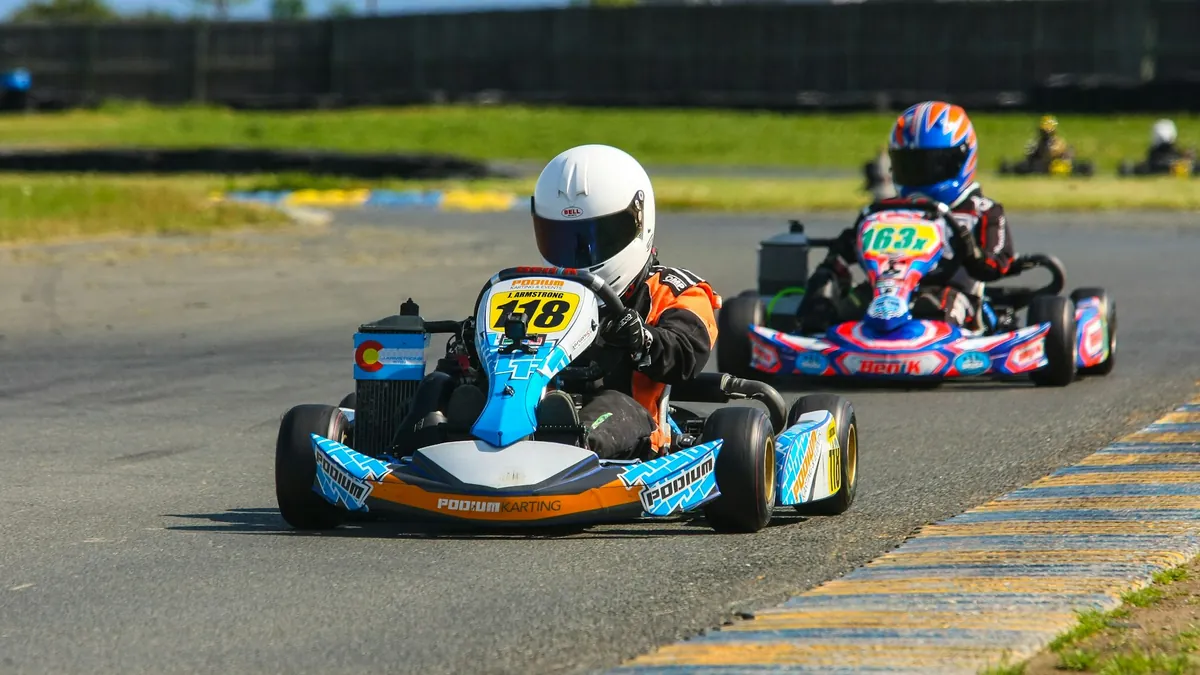
Everything you need to know before your first karting session—from choosing a track and understanding costs to learning driving techniques, selecting equipment, and exploring competitive karting.
Karting is one of the most exciting and approachable ways to discover motorsport. It combines speed, precision, competition, and continuous learning in a relatively compact and accessible format.
For some people, karting is an occasional activity with friends or family. For others, it becomes a serious hobby, a competitive sport, or the first step toward a broader motorsport career.
But if you’ve never driven a kart before, the sport can seem surprisingly complicated.
Should you start indoors or outdoors? Are electric karts different from gasoline-powered karts? Can children participate? Do you need your own helmet? How much does karting cost? When should you consider buying a kart? And what separates a casual driver from a competitive racer?
The good news is that getting started is much simpler than it might appear. You don’t need to own a kart, understand engines, or have previous motorsport experience to enjoy your first session.
This guide will help you understand the sport, avoid common beginner mistakes, and build a realistic path from your first rental session to more advanced karting.
Quick Start: Your First Karting Experience
If you’re completely new to karting, here’s the simplest way to begin.
- Find a beginner-friendly rental karting facility. Look for a track with clear safety procedures, suitable karts, and sessions designed for inexperienced drivers.
- Check the requirements before booking. Confirm age and height restrictions, pricing, session length, clothing requirements, and whether reservations are necessary.
- Start with rental karting. You don’t need to purchase a kart or expensive equipment to discover the sport.
- Pay attention to the safety briefing. Learn how the kart operates, understand the track signals, and follow the facility’s instructions.
- Focus on smooth, controlled driving. Your first objective should be to become comfortable, not to set the fastest lap.
- Review your experience afterward. Think about what you enjoyed, what you learned, and whether you want to return.
- Choose your next step. Continue recreational karting, explore more structured practice, or investigate competitive racing.
For most beginners, the best investment is simply spending time on track and learning the fundamentals before committing to expensive equipment.
The following sections explain each part of this journey in greater detail.
1. What Is Karting?
Karting is a form of motorsport involving small, lightweight vehicles called go-karts, driven on purpose-built circuits.
Unlike road cars, most traditional racing karts have no suspension and use a rigid chassis that responds directly to steering, braking, and changes in weight distribution. This makes karting an excellent environment for developing driving precision.
Karts vary significantly in performance and purpose.
A recreational rental kart is designed to be durable, relatively easy to operate, and suitable for repeated use by different drivers. A competition kart is designed around performance, adjustability, and the regulations of a specific racing class.
Despite their differences, both can teach valuable skills.
Why karting is such a good introduction to motorsport
Karting offers several advantages for beginners:
- Accessibility: You can usually try rental karting without owning a vehicle.
- Skill development: Driving rewards smoothness, precision, and consistency.
- Immediate feedback: Lap times help you measure improvement.
- Community: Karting brings together recreational drivers, families, mechanics, coaches, and racers.
- Progression: You can participate casually or pursue organized competition.
- Variety: Different tracks, kart types, and racing formats offer opportunities to develop new skills.
One of karting’s greatest advantages is that it can be enjoyed at different levels of commitment.
You don’t need ambitions of becoming a professional driver to enjoy karting. Learning to drive a kart well is a rewarding challenge in itself.
2. Choose Your Path: Rental Karting or Competitive Racing
Before getting started, it’s helpful to understand the different ways to participate.
Karting generally offers two main pathways: recreational rental karting and competitive kart racing.
Neither is inherently better. The right choice depends on your interests, experience, budget, and goals.
Rental karting: The easiest way to begin
Rental karting is usually the most accessible introduction to the sport.
A facility provides the kart, maintains the equipment, organizes the driving sessions, and establishes the safety procedures.
You typically pay for an individual session or a package of sessions.
Rental karting is particularly suitable for:
- People trying karting for the first time.
- Families looking for an activity together.
- Children and teenagers who meet the facility’s requirements.
- Adults interested in recreational motorsport.
- Drivers who want to improve without owning a kart.
- People exploring whether competitive karting might interest them.
Many rental facilities also offer leagues, timed competitions, or organized racing events. This can provide an introduction to competition without the full commitment of owning and maintaining a racing kart.
Indoor rental karting
Indoor karting is often a convenient starting point, particularly in regions with cold winters.
Indoor facilities commonly offer scheduled sessions using a fleet of rental karts. Track layouts are generally compact, with frequent corners and relatively short straights.
Advantages include predictable operating conditions, convenient scheduling, and the ability to drive year-round.
Indoor karting is particularly useful for practicing steering precision, concentration, and consistency.
Some indoor facilities use electric karts, while others may operate different types of equipment.
Outdoor rental karting
Outdoor circuits often provide a different driving experience.
Depending on the facility, outdoor tracks may feature longer straights, faster corners, greater elevation changes, and more variation in track conditions.
Outdoor karting also introduces environmental factors such as wind, temperature, and changing grip.
For a beginner who has already tried indoor karting, an outdoor rental session can be an excellent next step.
However, there is no requirement to begin indoors. A well-operated outdoor rental facility can be equally suitable for your first experience.
Electric versus gasoline-powered rental karts
Both types can provide enjoyable and educational experiences.
Electric karts typically deliver immediate torque and may allow facilities to manage performance electronically. They are especially common at indoor venues.
Gasoline-powered karts use combustion engines and can provide a different sound, throttle response, and mechanical experience.
Neither is automatically better for a beginner.
Track quality, kart maintenance, safety procedures, and the overall driving experience matter more than the power source alone.
Competitive karting
Competitive karting involves structured racing under defined sporting and technical regulations.
Drivers may compete in different classes based on age, engine type, chassis configuration, and other eligibility requirements.
Unlike rental karting, competitive karting may involve personally owned equipment, mechanical maintenance, testing, race entry fees, and travel.
Some drivers begin with rental racing leagues before moving into owner-kart competition. Others become involved through karting clubs, introductory programs, or supervised training.
Competitive karting is a significant step up in commitment, but one that becomes easier to understand after you’ve gained some experience.
If you’re unsure how rental karts, four-stroke racing karts, two-stroke racing karts, and electric karts differ, explore our guide to the different types of go-karts to understand their characteristics and intended uses.
Which pathway should you choose?
If you’re simply curious about karting, begin with a rental session.
If you enjoy driving and want to improve, consider returning regularly, trying different circuits, or joining a recreational league.
If you’re interested in organized competition, attend a karting event, speak with local clubs, and research the available racing categories before purchasing equipment.
Remember that recreational karting and competitive karting are not mutually exclusive. Many experienced racers continue to enjoy rental karting, and many recreational drivers develop impressive skills without entering formal championships.
If you want to experience karting without purchasing your own equipment, explore our Rental Karting guide. It explains indoor and outdoor tracks, electric and gasoline-powered rental karts, costs, safety procedures, driving techniques, and recreational racing opportunities.
3. What Age Can You Start Karting?
One of the most common questions from parents is how old a child needs to be before trying karting.
There is no universal starting age that applies to every facility or racing organization.
Eligibility depends on several factors, including the type of kart, the track, the child’s height, the available safety equipment, and the operator’s rules.
Karting for young children
Some karting facilities offer specially designed junior karts or introductory programs for younger drivers.
These may use reduced-power karts, age-appropriate equipment, and additional supervision.
However, not every facility accommodates young children.
Parents should confirm:
- Minimum age and height requirements.
- Whether junior karts are available.
- Whether sessions separate younger drivers from adults.
- What protective equipment is provided.
- Whether instruction or supervision is included.
- How the facility handles first-time drivers.
A child’s physical ability to operate the kart safely is just as important as meeting the published minimum age.
Karting for teenagers
Teenagers may have access to a wider range of rental karting experiences, depending on the facility’s requirements.
For teenagers interested in racing, karting clubs and competition organizers can explain the classes available for their age group.
Parents should review the relevant regulations before selecting a kart or committing to a racing program.
Can adults start karting?
Absolutely.
Karting is not exclusively a children’s sport or a training ground for future professional drivers.
Adults can begin recreational karting with no previous motorsport experience.
Some adults also pursue organized racing, provided they meet the eligibility requirements of their chosen category.
There is no requirement to have started karting at a young age to enjoy the sport or develop good driving skills.
Advice for parents introducing children to karting
For a child’s first experience, prioritize enjoyment, safety, and confidence.
Choose a facility with suitable equipment and clear procedures. Explain that the goal is to learn rather than immediately drive faster than everyone else.
Avoid comparing a beginner’s performance with that of children who already have extensive experience.
After the session, ask what the child enjoyed and whether they would like to return.
A positive first experience can help develop a lasting interest in the sport.
If you’re a parent exploring karting opportunities for your child, our Karting for Kids & Parents guide explains starting ages, safety considerations, junior karting programs, costs, and how to support your child’s development from their first rental session to competitive racing.
4. How to Find the Right Karting Track
Choosing the right facility can make a significant difference to your first karting experience.
A track that is suitable for experienced drivers may not necessarily offer the best introduction for someone who has never driven a kart.
What to look for in a beginner-friendly facility
Consider the following factors:
Safety procedures: The facility should provide clear instructions, appropriate protective equipment, and well-defined rules.
Suitable karts: The available equipment should match the driver’s age, size, and experience.
Track layout: A well-designed circuit with clear markings and appropriate safety features can make learning easier.
Staff supervision: Experienced staff should be available to explain procedures and respond to incidents.
Session organization: Understand whether you’ll be driving alongside beginners, experienced drivers, or a mixture of participants.
Location and accessibility: Consider travel time, operating hours, and seasonal availability.
Pricing: Compare session lengths, package options, and any additional fees.
Indoor or outdoor: Which should you choose first?
Both can be appropriate.
Indoor karting often provides convenience and predictable operating conditions.
Outdoor karting can offer different circuit layouts and driving conditions.
Rather than choosing solely based on indoor versus outdoor, focus on finding a reputable facility with beginner-friendly procedures.
Karting in Québec and Canada
Québec offers opportunities to experience karting recreationally and competitively.
Indoor facilities can be particularly convenient during colder months, while outdoor circuits provide additional opportunities when seasonal conditions allow.
If you’re located in Greater Montréal or elsewhere in Québec, a sensible starting point is to identify a rental facility within a practical driving distance.
As you gain experience, consider exploring different circuits to experience new layouts and driving conditions.
For competitive karting, local clubs, event organizers, and sanctioning bodies can provide information about available classes, events, and participation requirements.
Always consult current official information, as schedules, eligibility rules, and operating conditions may change.
DNA Karting is developing a directory of karting tracks, clubs, shops, and service providers to make discovering these resources easier.
5. Your First Karting Session: What to Expect
Your first session should be about becoming comfortable with the kart and understanding the track.
You do not need to set a fast lap time immediately.
Before arriving
Check the facility’s website or contact the operator to confirm:
- Minimum age and height requirements.
- Whether reservations are required.
- Session length and pricing.
- Clothing and footwear requirements.
- Helmet availability.
- Rules for inexperienced drivers.
- Any restrictions related to weather or track conditions.
- Whether a parent or guardian must be present for younger drivers.
Requirements differ between facilities, so don’t assume that every karting centre operates the same way.
What to wear
For most rental karting sessions, comfortable clothing and secure, closed-toe shoes are appropriate.
Avoid loose scarves, dangling accessories, and clothing that could interfere with the kart or its controls.
Long hair should be secured according to the facility’s rules.
Follow the operator’s instructions regarding helmets and any other protective equipment.
You generally don’t need to purchase a racing suit or professional equipment for your first rental session unless the facility specifically requires it.
The safety briefing
Before driving, staff will normally explain how the karts operate and how to behave on track.
Pay particular attention to:
- Accelerator and brake operation.
- Entry and exit procedures.
- Flag or signal meanings.
- Overtaking rules.
- What to do if your kart stops.
- How to respond to an incident.
- The procedure for returning to the pits.
Never ignore the safety briefing, even if you’ve driven at another facility. Rules and equipment can differ.
If something is unclear, ask a staff member before entering the track.
Getting comfortable in the kart
Before driving, make sure you can comfortably reach the pedals and operate the steering wheel.
Follow the facility’s instructions for adjusting the seat or pedals if the kart allows it.
Your seating position should let you maintain control without excessive stretching or awkward movements.
If the kart doesn’t fit properly, inform the staff.
Your first laps
Begin at a controlled pace.
Use the first few laps to identify the corners, understand the kart’s braking response, and learn where the track goes.
As you become more comfortable, gradually increase your pace while remaining smooth and predictable.
Avoid sudden movements and unnecessary risks.
Remember that other drivers may have different experience levels. Maintain awareness of your surroundings and follow the facility’s overtaking rules.
A successful first session is one where you drive safely, learn the circuit, and finish wanting to return.
After your session
Take a few minutes to reflect on the experience.
Ask yourself:
- Did I feel comfortable operating the kart?
- Which corners were most difficult?
- Did I understand the safety signals?
- Was I driving smoothly or making frequent corrections?
- Did I enjoy the experience?
- Would I like to try another session?
If the facility provides lap-time information, keep it for future comparison.
Your first session establishes a starting point, not a performance standard.
6. Learn the Fundamentals of Kart Control
Good karting technique is not simply about pressing the accelerator as hard as possible.
The fastest drivers combine observation, timing, smooth inputs, and an understanding of how the kart behaves.
For beginners, the goal is to develop repeatable habits that make driving safer, smoother, and more controlled.
Look where you want to go
One of the most important beginner habits is looking ahead.
If you stare directly in front of the kart, corners can appear suddenly, leaving you little time to prepare.
Instead, look toward the next important point on the circuit: the braking zone, corner apex, or exit.
Your hands will often follow your eyes.
Looking farther ahead also helps you anticipate other drivers and changes in track conditions.
Understand braking
Braking is one of the most important skills in karting.
A common beginner mistake is entering a corner too quickly, then attempting to correct the situation with excessive steering.
A better approach is to reduce speed before the corner so the kart can turn effectively.
In many traditional competition karts, braking primarily acts on the rear axle, although configurations vary. Rental kart braking systems can differ, so learn the characteristics of the specific kart you’re driving.
Practice braking in a straight line and releasing the brake smoothly as you prepare to turn.
More advanced braking techniques can come later.
Steer smoothly
Sudden or excessive steering can reduce grip and slow the kart.
Try to make deliberate steering inputs rather than repeatedly correcting the wheel.
If the kart begins sliding, simply turning the steering wheel farther may not solve the problem. You may need to reduce speed and allow the tires to regain grip.
Smooth driving is generally more consistent and easier to repeat.
Accelerate progressively
Accelerating too aggressively before the kart is ready can cause instability or compromise the exit of a corner.
Focus on getting the kart pointed toward the exit before applying more throttle.
The goal is not necessarily to accelerate earliest, but to accelerate effectively.
Understand the racing line
The racing line is the path a driver takes through a corner or series of corners to achieve an efficient lap.
A typical approach involves:
- Positioning the kart appropriately before the corner.
- Braking to a suitable entry speed.
- Turning toward the apex.
- Allowing the kart to move toward the exit as steering is reduced.
- Accelerating smoothly onto the next section.
However, not every corner should be approached in isolation.
Sometimes it’s worth sacrificing speed through one corner to obtain a better exit onto a long straight.
That is one of the fundamental concepts of fast driving.
Understand lap times and consistency
Most rental karting facilities provide lap-time information after a session.
This can be an excellent learning tool, but it’s easy to focus on the wrong number.
Your single fastest lap is not the only measure of your performance.
Consider these three indicators:
Best lap: Your fastest completed lap during the session.
Average pace: How quickly you typically circulate when driving without major interruptions.
Consistency: How closely your lap times remain grouped together.
For example, a driver recording several laps around 45 seconds may be developing more repeatable technique than someone who records one 44-second lap but repeatedly makes large mistakes.
The exact times are unimportant; the principle is consistency.
How to improve using lap times
After each session, ask yourself:
- Did I brake too late into certain corners?
- Was I steering more than necessary?
- Did I lose speed on corner exits?
- Was I distracted by other drivers?
- Which parts of the track felt smooth and repeatable?
Choose one area to improve during your next session.
Trying to fix everything at once often makes progress harder.
These fundamentals are only the beginning. For a deeper explanation of braking points, racing lines, cornering techniques, and improving your lap times, read our complete guide to karting driving techniques.
7. How Much Does Karting Cost?
The cost of karting depends heavily on how you participate.
There is a major difference between occasional rental sessions and competing with your own kart.
Understanding the different levels of financial commitment can help you choose a realistic starting point.
Recreational karting
Rental karting is usually the lowest-commitment option.
Your main expenses may include:
- Individual driving sessions.
- Optional memberships or packages.
- Transportation to the facility.
- Personal equipment, if desired.
Pricing varies by facility, session length, location, and type of kart.
For an accurate budget, check the current rates at the venues you plan to visit.
You don’t need to invest in a racing kart or extensive equipment to enjoy occasional recreational karting.
Regular practice
If you start driving frequently, your spending may increase because of repeated sessions, travel, and optional coaching.
A useful strategy is to set a monthly karting budget and track whether your sessions are producing meaningful improvement.
More laps do not automatically mean better progress. Focused practice matters.
Some facilities offer memberships or multi-session packages that may reduce the cost per visit.
Compare these options based on how often you realistically expect to drive.
Competitive karting
Competition introduces a much broader set of expenses.
These may include:
| Expense | What it covers |
|---|---|
| Kart and chassis | The primary racing vehicle |
| Engine | Purchase, maintenance, and class compliance |
| Safety equipment | Helmet, suit, gloves, footwear, and other required items |
| Tires | Practice and race use |
| Fuel and consumables | Fuel, lubricants, chains, sprockets, and replacement parts |
| Maintenance | Repairs, servicing, and engine work |
| Race entries | Registration for events or championships |
| Licensing and memberships | Requirements set by the governing organization |
| Transportation | Moving the kart and equipment |
| Storage and tools | Keeping and maintaining equipment |
| Coaching and testing | Optional development support |
The total budget varies enormously by class, number of events, equipment choices, and whether you operate independently or with a team.
Additional costs may arise from repairs, travel, accommodation, replacement components, or unexpected mechanical problems.
Why the complete budget matters
A common beginner mistake is focusing primarily on the purchase price of the kart.
The kart itself may represent only part of the overall expense.
Before committing to competition, consider the full cost of participation over an entire season.
This includes equipment, maintenance, practice, race entries, transportation, and any required memberships or licences.
Important: Before buying a competition kart, determine which class and events you intend to enter. Buying equipment first can lead to costly compatibility mistakes.
To better understand the financial commitment involved in recreational and competitive karting, including the expenses beginners often overlook, see our detailed breakdown of karting costs in Québec.
8. What Equipment Do You Need?
The equipment required for karting depends on whether you’re participating recreationally or competitively.
For a first rental session, the requirements are usually much simpler than for organized racing.
Equipment for rental karting
Most facilities provide the kart and required protective equipment.
This often includes a helmet, although the exact equipment and policies vary by operator.
Always use equipment approved by the facility and follow its instructions.
For occasional rental karting, purchasing your own helmet or racing clothing may not be necessary.
If you become a regular participant, you may eventually prefer personal equipment for comfort, fit, or convenience.
Before purchasing anything, confirm what the facility permits.
Equipment for competitive karting
Requirements vary by championship and class, but commonly include the following.
Helmet: A properly fitting helmet that meets the applicable certification requirements.
Racing suit: Protective clothing suitable for karting and compliant with the relevant regulations.
Gloves: Designed to provide grip and appropriate hand protection.
Karting shoes: Footwear that supports pedal control and meets any applicable requirements.
Rib and body protection: Protective equipment that may be required or recommended depending on the category and regulations.
Neck protection: Requirements and recommendations vary by organization and class.
Do not assume that equipment approved for one racing organization is automatically accepted by another.
Always consult the current technical and safety regulations for your intended events.
Choosing equipment carefully
Safety equipment should be selected based on proper fit, suitability, certification requirements, and intended use.
Price and appearance should not be the only considerations.
A poorly fitting helmet or unsuitable protective equipment may compromise comfort and protection.
If possible, visit a reputable karting equipment supplier where you can compare products and receive guidance.
For children, pay particular attention to fit and the requirements of their age category.
Choosing the right protective equipment is an important part of getting started. Our essential karting safety equipment guide explains helmets, racing suits, gloves, rib protectors, and what beginners should consider before buying.
9. Do You Need to Buy Your Own Kart?
For most beginners, the answer is no.
Rental karting lets you discover whether you enjoy the sport without immediately taking on ownership costs.
Buying your own kart becomes more relevant when you have a specific objective, such as regular practice at a suitable circuit or participation in a defined racing category.
When kart ownership makes sense
You may want to consider purchasing a kart when:
- You have decided to participate in organized competition.
- You understand the racing classes available in your area.
- You have access to a suitable circuit.
- You can arrange transportation and storage.
- You have a realistic budget for maintenance and consumables.
- You understand the technical requirements of your chosen category.
- You have access to appropriate mechanical support.
Ownership can provide greater control over equipment setup and maintenance, but it also introduces responsibilities that rental karting does not require.
Questions to ask before buying
Before purchasing a kart, consider:
- Which karting class do I want to enter?
- Which circuits will allow me to use the kart?
- Is the chassis and engine combination permitted?
- Where will I store the kart?
- How will I transport it?
- Can I perform basic maintenance?
- What support is available locally?
- What is my complete annual budget?
- Are replacement parts readily available?
- Will I have opportunities to practice regularly?
Answering these questions can prevent expensive mistakes.
Should you buy a new or used kart?
Used equipment can offer a lower initial purchase price, but its condition, maintenance history, and compatibility with current regulations matter.
A used kart may require replacement components or repairs before it is suitable for regular use.
When evaluating a used kart, consider the condition of the chassis, engine, brakes, steering components, and other mechanical systems.
Ask about maintenance records and the kart’s previous use.
If possible, seek advice from an experienced mechanic, coach, or reputable karting shop before committing.
A less expensive kart is not necessarily the better purchase if it requires significant repairs or cannot be used in your intended class.
Why local support matters
Access to a nearby karting shop, mechanic, or knowledgeable club can make ownership considerably easier.
These resources can help with maintenance, technical questions, replacement parts, and understanding class regulations.
For someone new to racing, having reliable support can be more valuable than choosing equipment based solely on advertised performance.
10. How to Progress From Beginner to Competitive Driver
Improvement is easier when you follow a structured process.
There is no universal timeline for becoming a confident driver or entering competition.
Some drivers progress quickly, while others enjoy recreational karting for years.
Both are valid ways to participate.
Stage 1: Become comfortable
Objective: Drive safely and understand basic kart control.
Focus on braking, steering, track awareness, and following instructions.
Don’t worry about being fast.
Stage 2: Learn the circuit
Objective: Recognize corners and develop a repeatable racing line.
Start identifying braking points, apexes, and exits.
Try to understand how one corner affects the next.
Stage 3: Build consistency
Objective: Complete several laps at a similar pace.
Reduce unnecessary steering corrections and avoid repeated mistakes.
Focus on making your driving repeatable rather than occasionally producing one fast lap.
Stage 4: Improve individual corners
Objective: Identify specific sections where time is being lost.
Work on one corner or sequence at a time.
Experiment carefully with braking points, steering inputs, and corner exits while remaining within the facility’s rules.
Stage 5: Develop racecraft
Objective: Learn to drive effectively around other participants.
Understand safe overtaking, positioning, awareness, and predictable driving.
Driving alone on an empty track is different from driving alongside others.
Good racecraft requires anticipating other drivers while maintaining control of your own kart.
Stage 6: Explore organized competition
Objective: Determine whether structured racing interests you.
Attend events, speak with participants, and learn about local categories.
Research the eligibility requirements, regulations, and financial commitments before entering a championship.
When should you consider coaching?
Coaching isn’t mandatory, but it can help you improve more efficiently.
A good instructor can identify habits that are difficult to recognize from behind the wheel.
For example, you might believe you’re losing time because you aren’t accelerating early enough, when the real issue is entering the corner too quickly.
Coaching can help with:
- Racing-line selection.
- Braking technique.
- Steering efficiency.
- Throttle application.
- Lap-time consistency.
- Track awareness.
- Racecraft.
- Practice planning.
Even a single focused coaching session may provide useful feedback.
If you’re considering competitive karting, coaching can also help you establish realistic development goals.
How do you know if you’re ready for racing?
There is no universal lap-time threshold that determines whether someone is ready to race.
Competition involves more than outright speed.
You should be comfortable with the fundamentals of kart control, capable of following track procedures, and able to drive predictably around others.
You should also understand the financial and time commitments involved.
Before entering a championship, consider:
- Have I developed reliable basic driving skills?
- Do I understand the rules and expectations of the category?
- Can I commit to the required preparation and maintenance?
- Do I have a realistic budget?
- Have I spoken with organizers or experienced participants?
- Do I enjoy the process of learning and improving?
Competitive karting can be extremely rewarding, but preparation makes the transition smoother.
If you’re ready to explore organized competition, our step-by-step guide to starting kart racing in Québec explains racing classes, licences, clubs, and preparing for your first event.
11. Common Beginner Karting Mistakes
Almost every new driver makes similar mistakes.
Recognizing them early can accelerate your development.
Mistake 1: Trying to drive at maximum speed immediately
Aggressive driving often creates mistakes, sliding, and inconsistent laps.
Better approach: Build speed progressively as your understanding of the circuit improves.
Mistake 2: Braking too late
Late braking can force you into a corner too quickly and compromise your exit.
Better approach: Use a comfortable braking point and move it gradually as you gain confidence.
Mistake 3: Turning the wheel too much
Excessive steering can scrub speed and overload the front tires.
Better approach: Enter corners at a speed that allows the kart to turn with controlled steering inputs.
Mistake 4: Ignoring corner exits
Beginners often focus on how quickly they enter a corner rather than how effectively they leave it.
Better approach: Pay special attention to exits leading onto long straights.
Mistake 5: Comparing yourself with experienced drivers
Experienced drivers may know the track, understand the equipment, and have hundreds of sessions behind them.
Better approach: Compare your performance against your own previous sessions.
Mistake 6: Ignoring track etiquette
Unsafe overtaking, blocking, or failing to respect signals can create unnecessary risks.
Better approach: Drive predictably, respect other participants, and follow the facility’s rules.
Mistake 7: Trying to improve everything at once
Focusing simultaneously on braking, steering, acceleration, lap times, and overtaking can make learning overwhelming.
Better approach: Choose one specific skill to practice during each session.
Mistake 8: Purchasing equipment too early
Some beginners become enthusiastic about racing and immediately start researching expensive karts and accessories.
However, without understanding racing classes, technical regulations, and maintenance requirements, it’s easy to make an unsuitable purchase.
Better approach: Gain experience, speak with local clubs, and understand your intended racing category before making major purchases.
12. A Practical Plan for Your First Three Months
If you want to take karting beyond a one-time experience, use this simple development plan.
The timeline is flexible. You can move more slowly or quickly depending on your availability, budget, and interests.
Month 1 — Discover the sport
Main objective: Become comfortable driving a kart.
Book one or two rental sessions.
Learn the safety procedures, become comfortable with the kart, and begin understanding the racing line.
Record your impressions after each visit.
Pay attention to which parts of driving feel natural and which require more concentration.
Don’t worry about comparing your lap times with experienced drivers.
At the end of the month, ask yourself whether you enjoy karting enough to continue practicing.
Month 2 — Build consistency
Main objective: Develop repeatable driving habits.
Return to a familiar circuit.
Focus on repeating braking points and improving corner exits.
Compare your lap times, but prioritize controlled, consistent driving.
If possible, try a second circuit to experience a different layout.
Begin identifying specific areas where your driving can improve.
For example, you might focus on braking earlier for one difficult corner or reducing unnecessary steering corrections.
Month 3 — Explore your next step
Main objective: Decide how you want to continue.
Consider whether you want to:
- Continue recreational karting.
- Participate in a rental karting league.
- Take an introductory coaching session.
- Explore different circuits.
- Attend an organized kart race.
- Speak with a local karting club.
- Research competitive karting classes.
If you’re interested in racing, begin learning about the equipment and regulations associated with your preferred category.
Avoid making major purchases until you have a clear objective.
Track your progress
A simple record of your karting sessions can help you identify improvements over time.
Consider recording:
- Date and circuit.
- Kart type.
- Number of sessions.
- Best lap time.
- Typical lap times.
- Main difficulty encountered.
- Skill practiced.
- One goal for the next session.
You don’t need complicated data-analysis software to begin.
A notebook or simple spreadsheet is enough.
The goal is to make your practice more deliberate and help you recognize progress.
13. Frequently Asked Questions About Starting Karting
Is karting difficult for beginners?
Most rental karting experiences are designed to accommodate newcomers who meet the facility’s requirements.
Learning basic control is approachable, but driving quickly and consistently takes practice.
Do I need a driver’s licence?
Rental karting facilities often have their own eligibility rules rather than requiring a road driver’s licence.
Check with the specific operator.
Competitive karting may require a separate motorsport licence.
What age can children start karting?
There is no universal minimum age.
Some facilities offer junior karts and introductory programs, while others have higher age or height requirements.
Parents should confirm eligibility and available equipment with the operator before booking.
Is indoor or outdoor karting better for beginners?
Both can be suitable.
Indoor karting offers convenience and controlled conditions, while outdoor karting provides a different driving environment.
Choose a reputable facility with beginner-friendly procedures.
Can adults start competitive karting?
Yes.
Karting isn’t exclusively for children or aspiring professional racers.
Adult participation is common, although the available classes and eligibility rules depend on the organizer.
Should I buy a helmet for rental karting?
Not necessarily.
Many rental facilities provide helmets.
If you drive regularly and want your own, first confirm the facility’s helmet requirements and accepted certifications.
Do I need to buy a kart to start racing?
Not always.
Some organized rental karting leagues allow participants to experience racing without owning a kart.
Owner-kart competition generally involves a greater equipment and maintenance commitment.
Check the available formats and requirements in your area.
How many sessions does it take to become good?
There is no fixed number.
Improvement depends on practice quality, coaching, track familiarity, and individual learning pace.
Focus on developing consistent driving habits rather than reaching a particular lap time within a set number of sessions.
Is karting expensive?
It depends on the level of participation.
Occasional rental sessions are generally much less expensive than owning and racing a competition kart.
The best approach is to begin with rental karting and increase your commitment gradually.
Can karting lead to car racing?
Karting develops skills that can transfer to other forms of motorsport, including vehicle control, racing lines, concentration, and racecraft.
However, progressing into car racing involves additional training, regulations, and substantial financial commitments.
What’s the most important skill for a beginner?
Consistency.
A driver who brakes predictably, steers smoothly, and repeatedly follows a controlled line has a strong foundation for future improvement.
Final Thoughts: Your Next Steps in Karting
Getting started in karting doesn’t require an expensive racing kart, advanced mechanical knowledge, or professional ambitions.
It begins with a single session.
Choose a suitable rental facility, pay attention to the safety briefing, and focus on learning rather than immediately chasing the fastest lap.
As your confidence grows, explore different circuits, refine your technique, and decide how far you want to take the sport.
If you’re a parent introducing your child to karting, focus on finding an age-appropriate experience that encourages confidence, enjoyment, and safe driving habits.
If you’re a recreational driver, remember that karting can remain an enjoyable hobby without becoming a major financial commitment.
If you’re interested in racing, take the time to understand the available classes, equipment requirements, local clubs, and full costs before making significant purchases.
Continue Your Karting Journey
Depending on your interests, these are useful next steps:
- Want to understand the costs? Explore our detailed guide to recreational and competitive karting expenses.
- Curious about different karts? Learn how rental, electric, four-stroke, and two-stroke karts differ.
- Want to become a better driver? Study racing lines, braking techniques, and cornering fundamentals.
- Thinking about purchasing equipment? Learn what safety equipment is required and how to choose it.
- Interested in competitive racing? Explore racing classes, licences, clubs, and the preparation required for your first event.
Whether you remain a recreational driver or eventually enter competitive racing, the same principles will serve you well: drive smoothly, respect safety, stay curious, and keep improving.
At DNA Karting, we’re building a knowledge resource for anyone interested in discovering, learning, and progressing in karting—from first-time rental drivers and parents to experienced racers.
Our goal is to make karting more accessible by sharing practical information, real-world experiences, and resources that help people connect with the sport.
Your karting journey starts with knowledge. The rest happens on track.
