



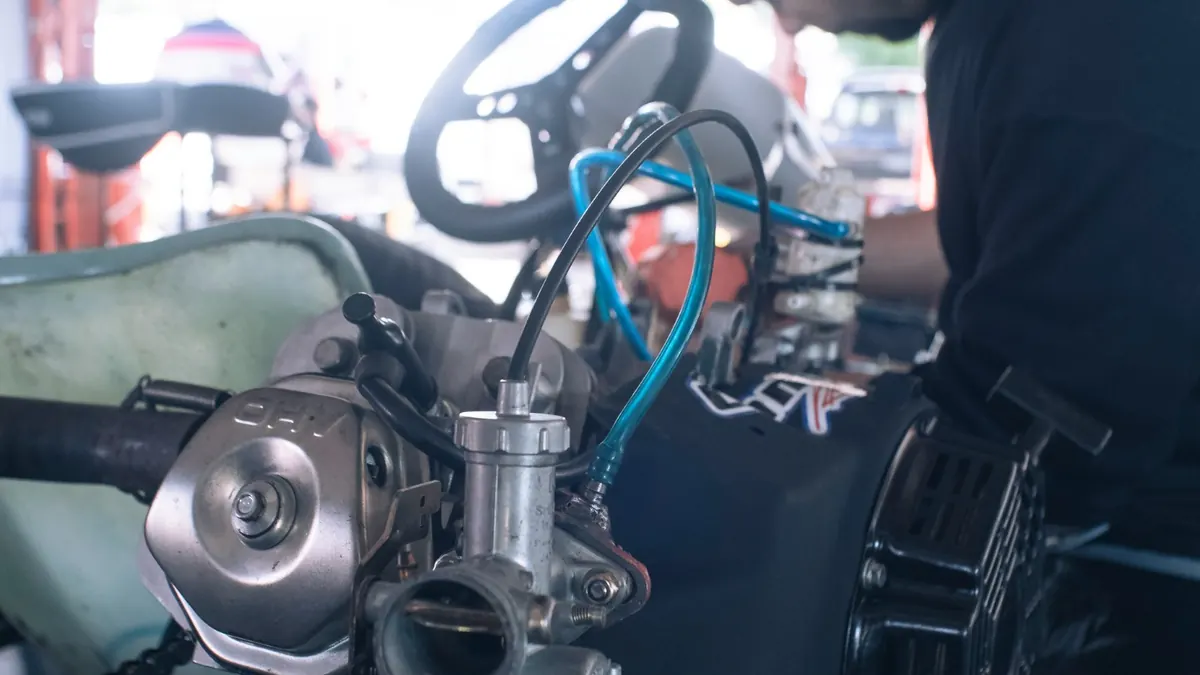
Owning a racing kart is an exciting step for anyone who wants to progress beyond recreational karting. But unlike rental karts, which are maintained by the track operator, privately owned racing karts require regular attention from their owners.
Proper racing kart maintenance is essential for safety, reliability, performance and controlling long-term costs.
Fortunately, beginners do not need to become professional mechanics overnight. By learning a few basic inspections and maintenance routines, new kart owners can gradually develop the knowledge needed to keep their equipment in good condition.
This guide explains the most important areas of racing kart maintenance, what to check before and after driving, and when to seek professional assistance.
1. Why Racing Kart Maintenance Matters
Racing karts are lightweight, specialized vehicles designed to operate under demanding conditions.
During a typical session, the chassis, tires, brakes, engine and drivetrain experience significant loads.
Without regular inspections, small problems can develop into expensive repairs or safety concerns.
Good maintenance helps you:
- Identify worn or damaged components
- Reduce the likelihood of mechanical failures
- Maintain consistent handling
- Extend the useful life of equipment
- Understand how your kart operates
- Avoid unnecessary expenses
- Prepare confidently for practice and competition
Maintenance should be treated as part of kart ownership rather than an occasional task.
If you are still considering purchasing equipment, read our guide to buying your first racing kart and comparing new versus used options.
2. Understand Your Kart Before Performing Maintenance
Not all racing karts have identical maintenance requirements.
The procedures and service intervals depend on several factors, including:
- Engine type
- Racing category
- Chassis manufacturer
- Brake system
- Driving conditions
- Frequency of use
- Manufacturer recommendations
A four-stroke racing kart may have different servicing needs from a high-performance two-stroke kart.
Likewise, a kart used for occasional practice may require a different maintenance schedule from one competing regularly.
Before performing mechanical work, obtain the manuals and technical documentation for your chassis and engine.
If you are unfamiliar with the different types of karts, see Types of Go-Karts Explained: Rental, 4-Stroke, 2-Stroke & Electric Karts.
3. Pre-Session Racing Kart Inspection
Before every driving session, perform a systematic inspection.
The goal is to identify obvious problems before the kart enters the track.
Tires and wheels
Check that:
- Tires are free from visible damage
- Tire pressures are appropriate for the equipment and conditions
- Wheels are properly secured
- Rims are not visibly bent or cracked
- Tires show no unusual wear patterns
Tire pressure can influence handling and performance, but the appropriate setting depends on the tire, track and manufacturer’s guidance.
Do not rely on a universal pressure recommendation.
Brakes
Inspect:
- Brake pedal operation
- Brake fluid leaks
- Brake disc condition
- Brake pad wear
- Caliper condition
- Unusual resistance or excessive pedal travel
Never drive a kart with a suspected braking problem.
Steering
Check:
- Steering wheel attachment
- Steering column
- Tie rods
- Steering joints
- Front-end components
- Unusual looseness or binding
The steering should move smoothly and predictably.
Chain and drivetrain
Inspect:
- Chain condition
- Chain tension
- Sprocket wear
- Chain alignment
- Rear axle components
- Appropriate chain lubrication
Follow the manufacturer’s procedure for adjusting chain tension. Excessive tension or looseness can cause problems.
Throttle system
Confirm that the throttle pedal moves freely and returns properly when released.
Inspect the cable and associated components for damage or binding.
Fuel and fluid systems
Check for:
- Fuel leaks
- Damaged hoses
- Loose connections
- Incorrect fluid levels where applicable
Any suspected leak should be investigated before driving.
General fasteners
Inspect accessible fasteners and mounting points for looseness or damage.
Use the manufacturer’s torque specifications where required.
Important: This checklist is an introduction, not a replacement for the manufacturer’s inspection procedures or the technical requirements of your racing organization.
4. Tire Maintenance
Tires are among the most important components affecting kart handling.
Their condition can influence braking, cornering and consistency.
Monitor tire pressure
Check pressures using a reliable gauge.
Follow the tire manufacturer’s guidance and consider the track conditions.
Record your settings to better understand how the kart behaves over time.
Inspect tire wear
Look for:
- Uneven wear
- Cuts
- Punctures
- Excessive deterioration
- Visible damage
Uneven wear may indicate a setup or mechanical issue, but it can also be influenced by driving style and track conditions.
Understand tire lifespan
Tire lifespan varies according to compound, track surface, temperature, driving style and usage.
Competition tires may lose performance before becoming visibly unusable.
Never assume that a tire is safe simply because tread or rubber remains.
5. Chain and Sprocket Maintenance
The chain transfers power from the engine to the rear axle.
Proper maintenance is important for reliability and efficient operation.
Inspect the chain
Look for:
- Damaged links
- Excessive wear
- Corrosion
- Improper tension
- Signs of misalignment
Check the sprockets
Inspect the teeth for unusual wear or damage.
A worn sprocket can accelerate chain wear.
Lubricate appropriately
Use a lubricant suitable for the chain and follow the manufacturer’s recommendations.
Avoid applying excessive lubricant or contaminating the brakes and tires.
Check alignment
The engine sprocket and rear sprocket must be correctly aligned.
If you are unsure how to inspect or adjust alignment, ask an experienced mechanic.
6. Brake System Maintenance
A properly functioning braking system is essential for safety.
Kart braking systems vary by manufacturer and racing class.
Routine checks should include:
- Brake pad wear
- Disc condition
- Caliper mounting
- Hydraulic connections
- Brake fluid leaks
- Pedal operation
Some systems require periodic fluid replacement or bleeding according to the manufacturer’s instructions.
Brake repairs should not be attempted without the appropriate knowledge and equipment.
If the brake pedal feels abnormal or braking performance changes unexpectedly, stop using the kart until the problem has been diagnosed.
7. Engine Maintenance
The engine is one of the most expensive components of a racing kart.
Maintenance requirements depend heavily on the engine model.
Four-stroke engines
Depending on the model, maintenance may involve:
- Oil changes
- Air filter inspection
- Spark plug inspection
- Fuel system checks
- Cooling system checks, if equipped
- Periodic mechanical servicing
Two-stroke engines
Depending on the model, maintenance may involve:
- Correct fuel and oil preparation
- Spark plug inspection
- Carburetor or fuel system checks
- Cooling system inspection, if equipped
- Exhaust system inspection
- Scheduled engine servicing or rebuilding
Follow the manufacturer’s service intervals
Do not assume that all kart engines require the same maintenance schedule.
Use the engine manufacturer’s documentation and seek assistance from an authorized or qualified service provider when necessary.
Keep an engine log
Record:
- Operating time
- Maintenance performed
- Parts replaced
- Repairs
- Unusual symptoms
- Service dates
This information can help identify developing problems and support future resale.
8. Chassis Inspection and Maintenance
The chassis is the foundation of the kart.
It supports the driver and mechanical components while playing a major role in handling.
Regularly inspect:
- Frame tubes
- Welds
- Seat mounts
- Engine mounts
- Bearing supports
- Front-end components
- Rear axle
- Bodywork attachments
Look for cracks, deformation, excessive wear and impact damage.
Inspect the underside
The underside of a kart can experience wear from contact with the track surface.
Excessive wear or damage should be evaluated.
Be careful with chassis repairs
Structural damage requires professional assessment.
Do not assume that a visibly repaired chassis is suitable for continued competition.
9. Cleaning Your Racing Kart
Cleaning is an important part of maintenance because it makes damage and wear easier to identify.
After driving
Remove accumulated dirt, rubber debris and other contamination.
Use cleaning products appropriate for the kart’s components.
Avoid damaging sensitive parts
Be cautious around:
- Bearings
- Electrical connections
- Brake components
- Engine openings
- Air filters
- Data acquisition equipment
Avoid directing high-pressure water at sensitive mechanical or electrical components.
Inspect while cleaning
Cleaning provides an opportunity to notice:
- Loose fasteners
- Fluid leaks
- Damaged bodywork
- Worn chains
- Cracked components
- Unusual tire wear
A clean kart is generally easier to inspect and maintain.
10. Maintenance After Every Track Session
Once a session is complete, allow the kart to cool safely before handling hot components.
Then perform a basic post-session inspection.
Check:
- Tire condition
- Chain condition
- Visible leaks
- Loose or damaged components
- Brake condition
- Chassis damage
- Engine behaviour during the session
Record any unusual sounds, vibrations or handling changes.
Do not ignore symptoms simply because the kart was able to finish the session.
11. Maintenance Before a Race Weekend
Competition places additional demands on equipment.
Before travelling to an event:
- Complete the manufacturer’s recommended inspections
- Verify technical compliance
- Inspect tires and wheels
- Check brakes and steering
- Inspect the drivetrain
- Confirm engine servicing is current
- Check safety-related components
- Prepare spare parts and tools
- Review the event’s technical requirements
Allow enough time to resolve problems before arriving at the track.
For an introduction to competition requirements, read How to Start Kart Racing in Québec: Licences, Classes, Clubs and Your First Race.
12. Essential Tools for Beginner Kart Owners
You do not need a professional workshop to begin learning basic maintenance.
A practical starter kit may include:
- Appropriate metric hand tools
- Torque wrench
- Tire pressure gauge
- Kart stand
- Chain maintenance supplies
- Cleaning materials
- Spare fasteners
- Basic replacement parts
- Maintenance notebook
The exact tools depend on the chassis and engine.
Purchase equipment suited to your kart rather than collecting tools you may never need.
13. Keep a Kart Maintenance Log
A maintenance log helps you track the condition and history of your equipment.
Useful information includes:
- Date
- Track
- Session duration
- Engine operating time, where available
- Tire pressures
- Components inspected
- Maintenance performed
- Parts replaced
- Problems observed
Example maintenance record
| Date | Activity | Notes |
|---|---|---|
| Practice day | Pre-session inspection | Tires, brakes and steering checked |
| After practice | Chain inspection | Wear and tension checked |
| Before next event | Engine service | Completed according to manufacturer schedule |
Keeping consistent records can help you make better maintenance decisions.
14. Common Racing Kart Maintenance Mistakes
Ignoring small problems
A minor mechanical issue may become more serious if left unresolved.
Using incorrect adjustments
Improper chain tension, fastener torque or component alignment can damage equipment.
Following generic engine service intervals
Different engines have different requirements.
Neglecting brake inspections
Brakes are a critical safety system and must be maintained properly.
Failing to document maintenance
Without records, it becomes harder to track wear and servicing.
Attempting complex repairs without experience
Certain repairs should be performed by qualified professionals.
Focusing only on performance
Safety and reliability should always come before lap-time improvements.
For driving-related improvements, explore Karting Driving Techniques: The Complete Guide to Racing Lines, Braking and Cornering.
15. Beginner Racing Kart Maintenance Checklist
Use this checklist as a starting point, alongside the manufacturer’s instructions.
Before each session
- Inspect tires and wheels
- Check tire pressures
- Inspect the brakes
- Check steering operation
- Inspect the chain and sprockets
- Check throttle return
- Look for fluid leaks
- Check accessible fasteners
- Confirm required safety components are present
After each session
- Allow the kart to cool
- Inspect for damage
- Check tire wear
- Inspect the drivetrain
- Look for leaks
- Clean the kart appropriately
- Record mechanical concerns
Periodically, according to the manufacturer
- Service the engine
- Inspect brake wear and fluid condition
- Check bearings and axle components
- Inspect chassis condition
- Replace worn parts
- Review maintenance records
16. Frequently Asked Questions
How often should I maintain a racing kart?
Basic safety inspections should be performed before every session. Additional servicing depends on the engine, chassis, operating conditions and manufacturer’s recommendations.
Is racing kart maintenance expensive?
Costs vary by equipment and frequency of use. Regular inspections may help identify problems early, but tires, engine servicing and replacement components remain ongoing expenses.
Can beginners maintain their own racing karts?
Beginners can learn basic inspection, cleaning and recordkeeping. Complex repairs and safety-critical work should be performed with qualified assistance.
Do two-stroke and four-stroke karts require different maintenance?
Yes. Engine designs and service requirements differ. Always consult the documentation for your specific engine.
How do I know when kart tires need replacing?
Inspect for damage, excessive wear and deterioration. Performance and replacement requirements also depend on the tire manufacturer’s guidance and racing regulations.
Should I clean my kart after every session?
Regular cleaning is recommended, particularly when the kart has accumulated dirt or debris. Cleaning also makes mechanical inspections easier.
What is the most important kart maintenance task?
There is no single task that replaces all others. Brakes, steering, tires, throttle operation and other safety-critical systems should be inspected before driving.
Conclusion: Good Maintenance Makes Karting More Enjoyable
Racing kart maintenance is an essential part of owning and operating competitive equipment.
For beginners, the best approach is to develop consistent habits rather than attempting to learn every mechanical procedure immediately.
Start with basic inspections, follow manufacturer instructions, maintain accurate records and seek professional assistance when necessary.
A well-maintained kart can help you enjoy more reliable practice sessions, improve consistency and reduce the risk of avoidable mechanical problems.
As your experience grows, your understanding of the kart’s mechanical systems will grow with it.
Continue Learning About Karting
Explore Learn Karting for more educational resources.
You can also read Essential Karting Safety Equipment: Helmets, Suits, Gloves, Rib Protectors and What Beginners Need to understand the protective equipment used in karting.
