



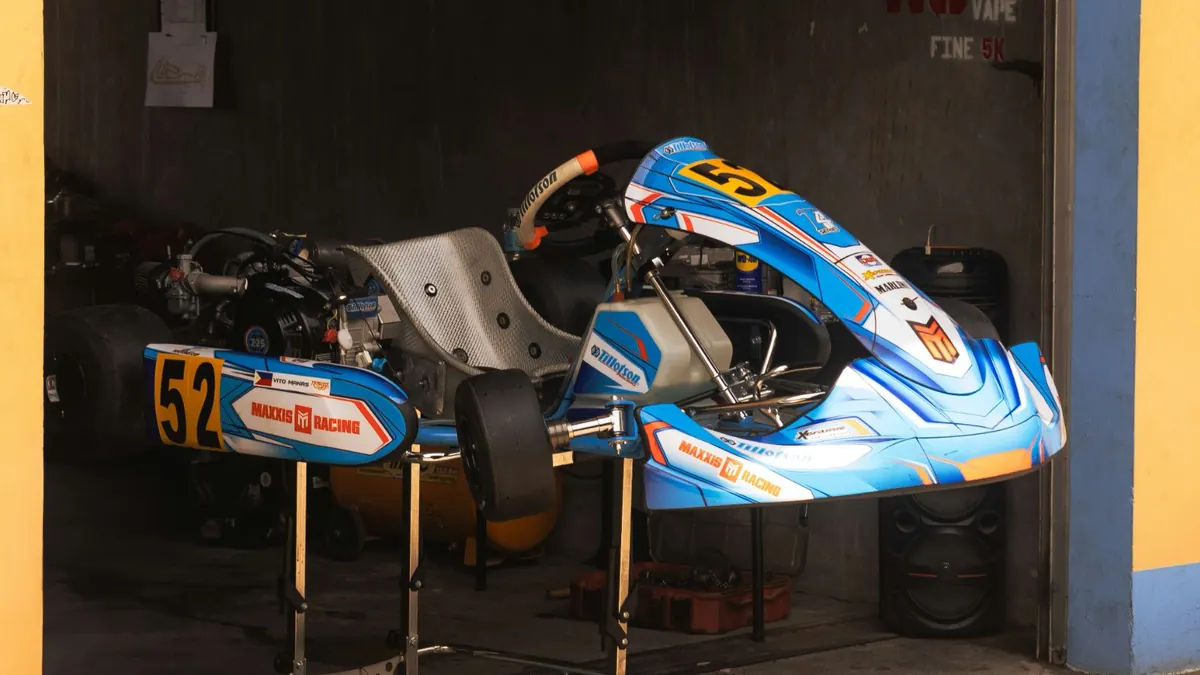
Your first competitive kart race is an exciting milestone. After spending time learning the fundamentals, practising on track, and exploring the different racing categories, you’re finally preparing to take part in an organized event.
But race day involves much more than driving fast.
You’ll need to understand the event schedule, prepare your kart and safety equipment, complete registration and technical inspections, and follow the instructions of race officials.
The key to a successful first kart race is preparation, not simply speed.
Whether you’re entering a local club event in Québec or participating in your first regional championship, this guide will help you understand what to expect and how to prepare.
1. Confirm That You’re Eligible to Race
Before registering for an event, make sure you meet the requirements of the championship and your chosen racing class.
Depending on the organizer, these requirements may include:
- Minimum or maximum age restrictions
- A valid racing licence or other required credentials
- Club or association membership
- Registration in an eligible racing class
- A kart that complies with technical regulations
- Approved personal safety equipment
- Any required parental authorization for minors
Rules can differ between events and racing organizations.
In Québec, consult the current regulations of the relevant sanctioning body and event organizer before registering.
If you’re still exploring how to enter competitive karting, read our How to Start Kart Racing in Québec: Licences, Classes, Clubs and Your First Race guide.
2. Choose the Right Racing Class
Your racing class determines which technical and sporting regulations apply to your participation.
Different categories may use different engines, chassis configurations, tires, weights, and age requirements.
Common examples include:
- Briggs & Stratton LO206 four-stroke classes
- Rotax Micro MAX and Mini MAX
- Rotax Junior MAX
- Rotax Senior MAX
- Rotax DD2
- Masters categories
Not every championship offers every class.
Before registering, confirm that your kart is eligible and that the class is included in the event.
If you’re uncertain about the differences, consult Kart Racing Classes Explained: Ages, Engines and Progression.
3. Read the Event Regulations and Schedule
Every organized kart race operates according to sporting regulations and event-specific instructions.
Before race day, review the official documents provided by the organizer.
These may include:
- Supplementary event regulations
- Registration deadlines
- Practice and qualifying schedules
- Race formats
- Technical inspection requirements
- Tire and fuel regulations
- Driver briefing procedures
- Pit and paddock access rules
- Noise restrictions
- Penalties and disciplinary procedures
Understanding the schedule is particularly important.
Arriving late for registration, technical inspection, or a mandatory briefing can create unnecessary stress and may affect your eligibility to participate.
Beginner tip: Save a copy of the event schedule on your phone and keep a printed version available in your paddock area.
4. Inspect Your Kart Before Race Day
A properly prepared kart is essential for safety, reliability, and performance.
Ideally, complete a thorough inspection before travelling to the circuit rather than waiting until race morning.
Chassis and steering
Check that:
- The steering system moves freely.
- Steering components are secure.
- Tie rods and connections show no obvious damage.
- The chassis has no visible cracks or concerning damage.
- The seat and mounting points are secure.
- The pedals operate correctly.
Braking system
Inspect the brake system for:
- Proper pedal operation
- Fluid leaks, where applicable
- Worn or damaged components
- Loose fittings
- Unusual resistance or excessive pedal travel
Brakes are a critical safety component.
If you’re uncertain about their condition, have the kart inspected by a qualified mechanic or experienced karting technician.
Engine and drivetrain
Depending on the kart, inspect:
- Engine mounting
- Chain condition and tension
- Sprocket wear
- Throttle return
- Fuel system connections
- Exhaust mounting
- Cooling system components, if applicable
Follow the engine manufacturer’s maintenance procedures and your class regulations.
Wheels and tires
Check:
- Tire condition
- Tire pressures
- Wheel mounting
- Wheel hardware
- Any class-specific tire requirements
Use the specifications appropriate for your equipment and event.
Do not assume that tires or settings permitted at a practice session are automatically legal for competition.
5. Prepare Your Safety Equipment
Your personal safety equipment should be inspected and organized before leaving home.
Depending on the class and regulations, required equipment may include:
- An approved full-face helmet
- A karting suit
- Karting gloves
- Karting boots
- A rib protector
- A body protector, where required
- A neck protection device, if mandated by the organizer
Check the applicable homologation and certification requirements.
An item that is suitable for recreational karting may not meet the requirements of organized competition.
For more information, read our Essential Karting Safety Equipment: Helmets, Suits, Gloves, Rib Protectors and What Beginners Need.
6. Pack a Race-Day Equipment Checklist
Preparing your equipment in advance helps avoid last-minute problems.
Use this checklist as a starting point, adjusting it to your kart and championship.
Driver essentials
- Racing licence and required identification
- Event registration confirmation
- Helmet
- Racing suit
- Gloves
- Karting boots
- Required rib or body protection
- Water and food
- Weather-appropriate clothing
Kart and mechanical equipment
- Race-ready kart
- Approved tires
- Fuel and lubricants permitted by the regulations
- Basic tool kit
- Tire pressure gauge
- Spare chain and sprocket components
- Spare spark plug, where applicable
- Common replacement hardware
- Cleaning supplies
- Kart stand
- Required transponder or timing equipment
Paddock equipment
- Canopy or shelter, where permitted
- Folding chairs
- Work table
- Extension cords, if permitted and needed
- Waste bags
- Appropriate fire extinguisher, if required
- First-aid supplies
- Printed schedule and regulations
Not every item is mandatory for every event. Use the organizer’s requirements as your final checklist.
7. Plan Your Transportation and Arrival
Getting to the circuit is another important part of race preparation.
Before leaving, confirm:
- The circuit address
- Travel time
- Paddock opening hours
- Parking and trailer access
- Registration location
- Technical inspection location
- Any restrictions on paddock setup
If you’re transporting your own kart, ensure it is securely loaded and that your vehicle and trailer are suitable for the equipment being carried.
For your first race, allow additional time for unexpected delays.
Arriving early is one of the simplest ways to reduce race-day stress.
8. Complete Registration and Technical Inspection
When you arrive at the circuit, you’ll generally need to complete administrative and technical procedures.
Administrative registration
The organizer may verify your identity, racing credentials, class registration, and required documents.
You may receive a wristband, paddock pass, or other event identification.
Technical inspection
Depending on the event, officials may inspect your kart and safety equipment.
Checks can include:
- Kart identification and racing numbers
- Engine eligibility
- Tire compliance
- Safety equipment certification
- Chassis and bodywork requirements
- Minimum weight
- Other class-specific technical specifications
Passing an initial inspection does not necessarily mean the kart is exempt from later checks.
Post-race technical inspections may also be conducted.
Always follow the instructions of the event officials.
9. Attend the Driver Briefing
A driver briefing may be mandatory before competition begins.
This is where officials explain important procedures and any event-specific rules.
Topics may include:
- Pit lane entry and exit
- Track flags and signals
- Starting procedures
- Overtaking rules
- Full-course caution procedures, where applicable
- Incident reporting
- Penalties
- Race stoppages
- Restart procedures
- Podium or post-race requirements
Pay particular attention to any changes from the published regulations.
If something is unclear, ask the appropriate official before going on track.
10. Use Practice Sessions to Learn the Circuit
Practice is an opportunity to become comfortable with the circuit and evaluate your kart’s behaviour.
For your first race, focus on consistency rather than immediately trying to match the fastest competitors.
During practice:
- Learn the circuit layout.
- Identify braking points.
- Develop consistent racing lines.
- Observe how the kart responds in different corners.
- Monitor tire and engine behaviour.
- Make only appropriate adjustments within your level of mechanical knowledge.
Avoid changing multiple setup variables at once.
If you’re working with a mechanic or coach, discuss your observations after each session.
For driving fundamentals, consult our Karting Driving Techniques: The Complete Guide to Racing Lines, Braking and Cornering.
11. Understand Qualifying
Many karting events use a qualifying session to determine the starting order for a race or heat.
The exact format depends on the championship.
In timed qualifying, drivers generally attempt to record their fastest valid lap during the allotted session.
For a first-time racer, qualifying can feel stressful because every lap seems important.
However, it’s better to focus on driving clean, consistent laps than to take unnecessary risks.
Remember:
- Follow the session procedures.
- Respect other drivers.
- Avoid blocking or unsafe manoeuvres.
- Pay attention to flags.
- Understand the rules concerning track limits and penalties.
Your qualifying result is only one part of the event.
Even if you start near the back, the race can still provide valuable experience.
12. Prepare for Your First Race Start
Race starts are among the most demanding moments in karting.
Multiple drivers accelerate and approach the first corners in close proximity.
Depending on the class and championship, the event may use a rolling start or another specified procedure.
Before your race:
- Understand the starting format.
- Know your grid position.
- Follow the instructions of officials.
- Maintain the required formation.
- Avoid sudden or unpredictable movements.
- Respect the starting signals.
For your first race, completing the opening laps safely is more important than gaining several positions immediately.
Stay aware of the drivers around you and avoid unnecessary contact.
13. Focus on Consistency During the Race
Once the race begins, it’s natural to feel pressure to drive faster.
However, aggressive driving often creates mistakes, especially for inexperienced competitors.
Concentrate on:
- Smooth braking
- Predictable steering
- Maintaining momentum
- Following the racing line
- Managing traffic
- Respecting track limits
- Responding to flags and officials
You don’t need to overtake every kart immediately.
A consistent driver who avoids incidents can often achieve a more satisfying result than someone who takes excessive risks.
Try to learn from each lap and remain focused on the next corner.
14. Know What to Do if Something Goes Wrong
Mechanical problems, spins, and contact can occur during kart racing.
If your kart develops a problem, follow the event’s safety procedures.
Depending on the situation, officials may direct you to stop in a safe location or return to the pits.
Do not attempt repairs on the racing surface.
If you become involved in an incident:
- Follow marshal instructions.
- Remain aware of approaching traffic.
- Do not rejoin unsafely.
- Report any injury or equipment damage.
- Follow the organizer’s procedures for leaving the track.
If you experience a significant impact, have your kart and safety equipment inspected before returning to competition.
15. What Happens After the Race?
At the end of the race, follow the chequered flag and the event’s return-to-paddock procedures.
Depending on the regulations, you may be required to:
- Enter a designated parc fermé area
- Complete post-race technical inspection
- Participate in weighing procedures
- Remain available for officials
- Attend a podium ceremony, if applicable
Do not leave a controlled inspection area until permitted.
Once the official procedures are complete, take time to review your performance.
Ask yourself:
- Did I follow the race procedures correctly?
- Were my lap times consistent?
- Did I make avoidable mistakes?
- How did I handle traffic?
- What should I practise before the next event?
Your first race is an opportunity to learn, regardless of your finishing position.
16. Common Mistakes First-Time Kart Racers Make
Arriving without reading the regulations
This can lead to confusion about procedures, equipment, and schedules.
Waiting until race morning to inspect the kart
Mechanical problems discovered at the last minute can be difficult to resolve.
Bringing too little equipment
Missing a basic tool or spare component can interrupt your event.
Making too many setup changes
Changing several variables simultaneously makes it difficult to understand what improves or worsens performance.
Taking unnecessary risks at the start
The opening corners can be crowded. Patience and awareness are essential.
Focusing only on finishing position
A first race should be measured by learning, consistency, and safe participation.
Forgetting to eat and drink
Long days at the circuit require attention to hydration, nutrition, and rest.
17. How Much Should You Budget for Your First Race?
The cost of your first race depends on your category, location, equipment, and event format.
Potential expenses include:
- Race registration
- Licence and membership fees
- Practice sessions
- Tires
- Fuel and lubricants
- Mechanical maintenance
- Transportation
- Food and accommodation
- Replacement parts
- Coaching or team assistance
Some drivers compete using their own equipment and perform most maintenance themselves.
Others rely on a race team or arrive-and-drive competition package.
Before committing, estimate the complete cost of the event rather than looking only at the entry fee.
For more information, see How Much Does Karting Cost in Québec? The Complete Beginner’s Guide.
18. Official Resources for Racing in Québec
For competitive karting in Québec, consult the relevant official organizations and championship documents.
Useful starting points include:
- Auto Sport Québec — Provincial motorsport information and karting regulations.
- Coupe de Montréal — Championship information, race calendars, and event documents.
- Canadian Rotax MAX Challenge — Rotax competition information and technical regulations.
Always verify the current rules, eligibility requirements, and event schedule directly with the organizer.
Final Thoughts: Your First Kart Race Is About Learning
Your first competitive kart race is an important step in your development as a driver.
It’s normal to feel nervous, make mistakes, or discover that race-day procedures are more complicated than expected.
What matters most is arriving prepared, respecting the rules, driving within your abilities, and learning from the experience.
A successful first race isn’t necessarily one where you finish on the podium. It’s one where you gain confidence, improve your skills, and leave better prepared for the next event.
Take the time to prepare your equipment, understand the schedule, and ask questions when needed.
With each event, the process will become more familiar, allowing you to focus increasingly on driving and competition.
Continue Learning About Kart Racing
Explore more educational guides in our Racing & Competition section.
