

Everything you need to know about rental karting, from choosing a track and preparing for your first session to improving your driving skills and discovering recreational racing.
Rental karting is one of the easiest ways to experience motorsport. You don’t need to own a kart, understand mechanical maintenance, or have previous racing experience to enjoy driving on a purpose-built circuit.
For many people, rental karting is an occasional activity with friends or family. For others, it becomes a regular hobby, an opportunity to improve driving skills, or the first step toward organized competition.
Whether you’re a complete beginner, a parent planning a family outing, or an experienced driver looking for a new challenge, rental karting offers a wide range of possibilities.
But before booking a session, it’s helpful to understand how rental karting works, what different facilities offer, how much it costs, and what you can do to make the most of your time on track.
This guide covers everything from your first rental session to improving lap times, participating in rental leagues, and deciding whether to explore competitive kart racing.
1. What Is Rental Karting?
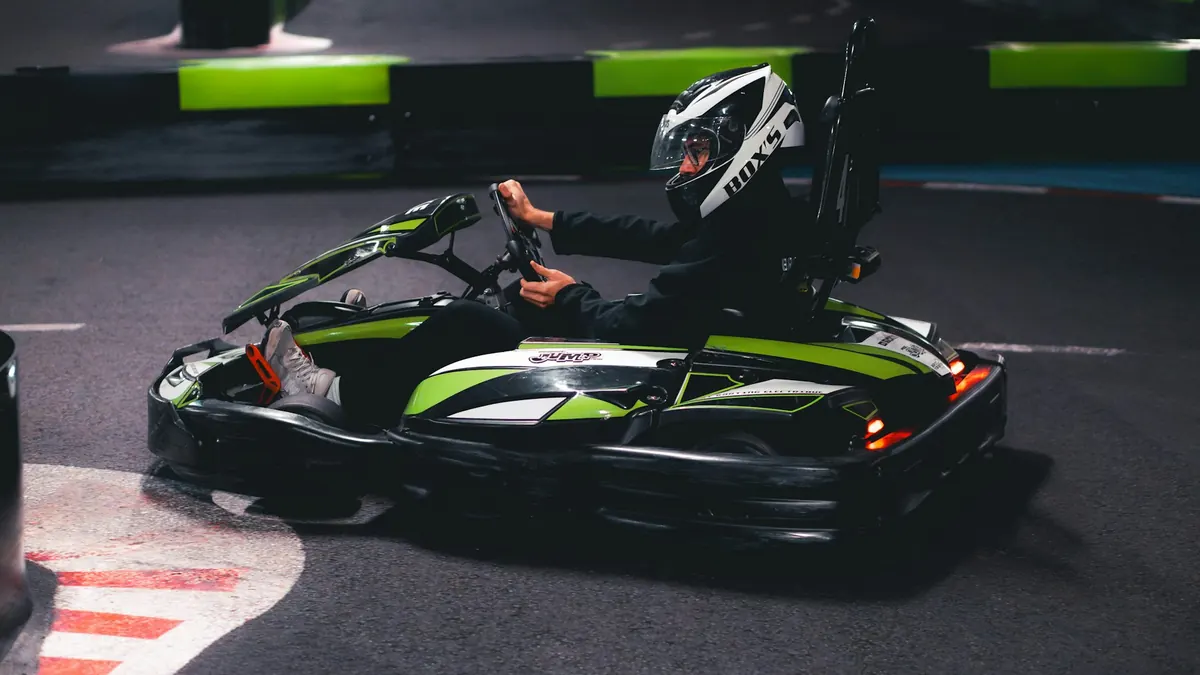
Rental karting is a form of recreational motorsport in which a facility provides the karts, maintains the equipment, and organizes driving sessions.
Participants typically pay for a session or a package of sessions.
Unlike owner-kart racing, rental karting does not require participants to purchase, transport, store, or maintain their own vehicles.
This makes it an accessible introduction to karting.
How rental karting works
Most rental karting facilities follow a similar process:
- Choose a facility and reserve a session if necessary.
- Check in and complete any required registration.
- Receive appropriate protective equipment.
- Attend a safety briefing.
- Enter the kart and become familiar with the controls.
- Drive during the scheduled session.
- Review your experience and lap times afterward.
The exact procedures vary by facility.
Some centres organize open driving sessions, while others offer private bookings, group events, leagues, or structured competitions.
Why rental karting is popular
Rental karting appeals to different audiences because it combines convenience with a genuine driving challenge.
It can be enjoyed by first-time drivers, families, friends, corporate groups, and people interested in developing motorsport skills.
It also allows drivers to try different circuits without committing to kart ownership.
For anyone completely new to the sport, our complete beginner’s guide to karting explains the broader karting landscape, including equipment, costs, and the path toward competition.
2. Indoor vs. Outdoor Rental Karting
One of the first decisions you’ll make is whether to visit an indoor or outdoor karting facility.
Both can offer excellent experiences, but they have different characteristics.
Indoor rental karting
Indoor tracks are generally located inside purpose-built or adapted buildings.
They often feature compact layouts, multiple corners, and relatively short straights.
Many indoor facilities operate year-round, making them particularly convenient in regions with cold winters.
Advantages may include:
- Year-round availability.
- Predictable operating conditions.
- Convenient locations.
- Organized session scheduling.
- Opportunities to practice technical cornering.
Indoor karting is often a practical starting point for beginners, although track suitability depends on the individual facility.
Outdoor rental karting
Outdoor circuits may feature longer straights, faster corners, elevation changes, and different surface conditions.
Driving outdoors also introduces environmental factors such as temperature, wind, and changing grip.
Advantages may include:
- Different circuit layouts.
- Greater variation in corner types.
- Exposure to changing track conditions.
- Opportunities to experience longer circuits.
Outdoor karting can be particularly enjoyable for drivers who want to explore new tracks and improve their ability to adapt.
Which is better for beginners?
Neither is automatically better.
A well-operated indoor facility may be an excellent first choice, but an outdoor circuit with suitable rental karts and beginner-friendly procedures can be equally appropriate.
Focus on safety, kart suitability, supervision, and the overall experience rather than choosing solely by track type.
3. Electric vs. Gasoline-Powered Rental Karts
Rental karting facilities may use electric karts or gasoline-powered karts.
Both can provide enjoyable driving experiences.
Electric rental karts
Electric karts use electric motors powered by batteries.
They typically provide immediate torque and may allow facilities to manage performance electronically.
Electric karting is especially common at indoor facilities.
Potential advantages include:
- Responsive acceleration.
- Reduced local exhaust emissions.
- Lower operating noise.
- Electronically managed performance in some fleets.
The exact driving experience depends on the kart model and the facility’s configuration.
Gasoline-powered rental karts
Gasoline-powered rental karts use combustion engines.
Many facilities use four-stroke engines designed for durability and repeated operation.
These karts provide a different sound, throttle response, and mechanical experience.
They are commonly found at outdoor circuits, although availability varies.
Does the engine type matter for beginners?
The quality of the facility and suitability of the equipment are generally more important than the motorization.
A well-maintained kart with appropriate performance and clear operating procedures is preferable to choosing a kart solely because it is electric or gasoline-powered.
If you want to understand the differences between rental karts, four-stroke racing karts, two-stroke racing karts, and electric models, read our guide to the different types of go-karts.
4. Who Can Participate in Rental Karting?
Rental karting can accommodate a wide range of participants, but eligibility varies by facility.
Adults
Adults can begin rental karting without previous motorsport experience, provided they meet the facility’s requirements.
A road driver’s licence is often unnecessary, although operators may have their own identification and eligibility rules.
Rental karting can be enjoyed casually or practiced regularly to develop driving skills.
Children
Some facilities offer junior karts or introductory programs for children.
Minimum age and height requirements vary.
Parents should confirm:
- Minimum age and height.
- Availability of junior karts.
- Whether children drive separately from adults.
- Protective equipment requirements.
- Supervision and instruction.
- Any required parental authorization.
For more information about introducing children to the sport, visit our Karting for Kids & Parents guide.
Teenagers
Teenagers may have access to additional rental karting options, including leagues and organized events, depending on the facility.
Parents should verify eligibility before booking.
Groups and corporate events
Many facilities offer group bookings for birthdays, social events, and corporate activities.
These may include private sessions, organized competitions, or customized event formats.
Group packages differ by facility, so confirm the included services, minimum participant requirements, and pricing.
5. How to Choose a Rental Karting Facility
Choosing the right facility can have a major impact on your experience.
A good rental karting centre should provide suitable equipment, clear procedures, and an environment appropriate for your experience level.
Safety and supervision
Look for facilities with clear safety briefings, track signals, and operating rules.
Staff should be available to supervise sessions and respond to incidents.
Kart condition
Rental karts are used frequently and require regular maintenance.
While customers may not be able to evaluate every mechanical component, the facility should appear organized and attentive to equipment condition.
If a kart seems to have a mechanical problem, inform staff.
Track layout
Different circuits offer different challenges.
Some emphasize technical corners and precision, while others feature longer straights and faster sections.
For beginners, a track with clear markings and suitable operating procedures can make learning easier.
Session organization
Ask whether sessions include drivers with different experience levels.
Some facilities offer beginner-specific sessions or junior programs.
Pricing and packages
Compare session length, total price, membership options, and any additional charges.
A lower advertised price is not necessarily better value if the driving time or included services differ.
Location and convenience
Consider travel time, parking, operating hours, and seasonal availability.
A convenient facility may make regular practice easier.
Finding rental karting tracks
DNA Karting is developing a directory of karting facilities and service providers to help visitors discover rental tracks, clubs, and other karting resources.
As the directory grows, it will become a useful starting point for finding rental karting opportunities by location and type of facility.
Until then, verify current pricing, operating hours, and participation requirements directly with the operator.
6. What to Expect During Your First Rental Karting Session
Your first session should focus on becoming comfortable with the kart and learning the circuit.
There is no need to chase the fastest lap immediately.
Before arriving
Confirm:
- Reservation requirements.
- Minimum age and height.
- Session length and pricing.
- Clothing requirements.
- Helmet availability.
- Weather restrictions, if applicable.
- Any additional registration requirements.
What to wear
For most rental karting sessions, comfortable clothing and secure, closed-toe shoes are appropriate.
Avoid loose accessories or clothing that could interfere with the controls.
Follow the facility’s instructions concerning helmets and other protective equipment.
The safety briefing
Before driving, staff will normally explain the kart controls, track rules, and safety procedures.
Pay particular attention to:
- Accelerator and brake operation.
- Track entry and exit.
- Flag and signal meanings.
- Overtaking rules.
- What to do if your kart stops.
- How to respond to staff instructions.
Never ignore the briefing, even if you’ve driven at another facility.
Getting comfortable in the kart
Make sure you can reach the pedals and operate the steering wheel comfortably.
If the kart has adjustable components, follow staff instructions.
Inform staff if the kart does not fit properly.
Your first laps
Begin at a controlled pace.
Learn the circuit, identify braking zones, and become familiar with how the kart responds.
Increase your pace gradually while maintaining smooth and predictable driving.
Avoid unnecessary risks or aggressive overtaking.
After the session
If lap times are available, review them as a learning tool.
Think about which corners were difficult and what you would like to improve next time.
A successful first session is one where you drive safely, learn something, and enjoy the experience.
7. How Much Does Rental Karting Cost?
Rental karting costs vary by location, facility, kart type, and session format.
Unlike competitive karting, you generally do not need to purchase a kart or pay for its maintenance.
Individual sessions
Many facilities charge for a fixed period of driving or a defined session.
Check how much actual track time is included.
Some centres also charge registration or membership fees.
Multi-session packages
Facilities may offer packages that reduce the cost per session.
These can be useful if you expect to return regularly.
Before purchasing, check expiration dates and booking restrictions.
Memberships
Some centres offer memberships with benefits such as discounted sessions, access to events, or other privileges.
A membership is worthwhile only if you expect to use the included benefits.
Group bookings
Private events and group packages may use different pricing structures.
Confirm whether the price includes exclusive track access, equipment, race organization, or other services.
Budgeting for regular practice
If you want to improve your driving, establish a monthly budget.
Track how often you drive and what you learn from each session.
Focused practice can be more valuable than simply accumulating laps.
For a broader comparison of recreational and competitive karting expenses, see our detailed guide to karting costs in Québec.
8. Safety Rules and Equipment for Rental Karting
Karting involves risks, including collisions, loss of control, and injuries.
Facilities use rules, supervision, and protective equipment to help manage these risks, but no motorsport activity is completely risk-free.
Follow the facility’s instructions
Always respect the rules concerning speed, overtaking, track entry, and incidents.
Do not intentionally collide with other karts.
Follow the directions of staff and track signals.
Understand flags and signals
Facilities may use flags, lights, or electronic signals to communicate instructions.
The exact system can vary.
Learn the meaning of each signal during the safety briefing.
Helmets and protective equipment
Many rental facilities provide helmets and other required equipment.
Use properly fitted equipment approved by the operator.
If you want to use your own helmet, confirm that it meets the facility’s requirements.
Clothing and footwear
Wear appropriate clothing and secure footwear.
Avoid loose items that could become caught in the kart or interfere with driving.
What to do after an incident
Follow the facility’s instructions if your kart stops or you are involved in an incident.
Do not leave the kart or walk onto the circuit unless directed to do so by staff, except where immediate danger requires action.
For more information about helmets, suits, gloves, rib protectors, and other equipment, read our essential karting safety equipment guide.
9. Basic Driving Techniques for Rental Karts
Rental karting rewards smooth, consistent driving.
Driving aggressively does not necessarily produce faster lap times.
Look ahead
Focus your vision on where you want the kart to go.
Look toward the next braking point, corner, or exit rather than directly in front of the kart.
Brake before the corner
Entering too quickly can make it difficult to follow an efficient line.
Reduce speed before the corner and prepare the kart to turn.
Steer smoothly
Avoid unnecessary steering corrections.
Excessive steering can reduce grip and slow the kart.
Accelerate progressively
Focus on positioning the kart toward the corner exit before increasing throttle.
A good exit can be especially important before a long straight.
Learn the racing line
The racing line is the path that allows a driver to navigate a corner or series of corners efficiently.
A typical approach involves positioning the kart before the corner, braking, turning toward the apex, and accelerating toward the exit.
The ideal line depends on the circuit and the surrounding corners.
For a more detailed explanation, explore our complete guide to karting driving techniques.
10. How to Improve Your Rental Karting Lap Times
Improving lap times requires more than driving harder.
The most effective approach is to identify specific weaknesses and practice deliberately.
Understand your lap-time data
Many facilities provide lap-time results.
Pay attention to:
Best lap: Your fastest completed lap.
Average pace: Your typical speed across multiple laps.
Consistency: How closely your lap times remain grouped.
Consistency is often a useful sign that your driving technique is becoming repeatable.
Learn one corner at a time
Choose a corner where you regularly lose speed or feel uncomfortable.
Focus on braking, steering, and exit position.
Avoid trying to improve the entire circuit at once.
Reduce unnecessary sliding
Sliding can feel exciting, but excessive sliding often reduces speed.
Try to maintain grip through smooth inputs.
Focus on corner exits
A strong exit can help you carry speed onto the following straight.
Sometimes entering a corner slightly slower allows a better overall result.
Compare sessions carefully
Lap times can be affected by kart condition, traffic, track conditions, and other factors.
Avoid assuming that every difference in lap time reflects a change in your skill.
Consider coaching
An experienced instructor may help identify habits that are difficult to recognize on your own.
Even a short coaching session can provide useful feedback.
11. Rental Karting Leagues and Organized Racing
Rental karting is not limited to casual sessions.
Some facilities organize leagues, championships, endurance events, and structured races.
These can provide an introduction to competition without requiring participants to own a kart.
What is a rental karting league?
A rental league is an organized series of events using karts supplied by the facility or organizer.
Participants compete according to the event’s rules.
Formats vary and may include qualifying sessions, heats, finals, or points-based championships.
Advantages of rental leagues
Rental leagues can offer:
- Structured competition.
- Opportunities to develop racecraft.
- Regular driving experience.
- A community of interested drivers.
- Lower equipment commitments than owner-kart racing.
What to check before joining
Ask about:
- Age and eligibility requirements.
- Experience expectations.
- Race formats.
- Entry fees.
- Safety rules.
- Equipment requirements.
- Championship schedules.
Not every rental league is appropriate for complete beginners.
Some may require prior experience or an evaluation.
Learning racecraft
Driving in organized events introduces additional skills.
These include safe overtaking, positioning, awareness, and managing pressure.
Respect for other participants and the rules remains essential.
12. When Should You Consider Competitive Karting?
Some rental drivers eventually become interested in racing with their own equipment.
This transition can be rewarding, but it involves additional responsibilities.
Signs you may be interested
You may want to explore competitive karting if you:
- Enjoy regular practice.
- Want to develop more advanced driving skills.
- Are interested in organized racing.
- Have a realistic budget.
- Can commit time to preparation and maintenance.
- Want to learn about kart setup and mechanical systems.
Understand the racing categories
Competitive karting is divided into classes with specific technical and eligibility requirements.
Before purchasing a kart, determine which category and events you intend to enter.
Consider the full cost
Owning a racing kart involves expenses beyond the initial purchase.
These can include tires, maintenance, repairs, race entries, licences, transportation, and storage.
Visit a race before committing
Attending an organized event can help you understand the environment.
Speak with clubs, participants, mechanics, and suppliers.
For a detailed introduction to racing classes, licences, clubs, and your first event, read our step-by-step guide to starting kart racing in Québec.
13. Common Rental Karting Mistakes
Beginners often make similar mistakes when learning to drive.
Recognizing them can help you improve more efficiently.
Trying to drive too fast immediately
Aggressive driving often creates mistakes.
Better approach: Build speed progressively.
Braking too late
Late braking can compromise the entire corner.
Better approach: Use a controlled braking point and focus on a smooth exit.
Turning the wheel excessively
Too much steering can reduce grip.
Better approach: Use deliberate steering inputs.
Ignoring corner exits
Focusing only on corner entry can reduce speed on the following straight.
Better approach: Consider how each corner connects to the next.
Comparing yourself with experienced drivers
Other participants may have far more track experience.
Better approach: Compare your progress with your own previous sessions.
Ignoring track etiquette
Unsafe overtaking and unpredictable movements create unnecessary risks.
Better approach: Respect the rules and drive predictably.
Focusing only on the fastest lap
A single fast lap does not always indicate consistent driving.
Better approach: Work on repeatable technique and steady lap times.
14. Frequently Asked Questions About Rental Karting
Do I need a driver’s licence?
Many rental karting facilities do not require a road driver’s licence.
However, each operator establishes its own eligibility requirements.
Can children drive rental karts?
Some facilities offer junior karts and children’s programs.
Minimum age and height requirements vary.
Is rental karting safe?
Karting carries risks, including collisions and injuries.
Choose a facility with appropriate equipment, clear safety procedures, and supervision.
Is indoor or outdoor karting better?
Both can be suitable.
The best choice depends on the facility, circuit, available karts, and your preferences.
Are electric karts faster than gasoline-powered karts?
Performance depends on the specific kart models and their configuration.
Neither motorization is automatically faster in every situation.
Do I need to buy a helmet?
Not necessarily.
Many rental facilities provide helmets.
Confirm the operator’s equipment requirements before purchasing your own.
How long is a rental karting session?
Session lengths vary by facility.
Check the actual driving time included before booking.
Can rental karting help me become a better driver?
Yes.
Regular, focused practice can help develop vehicle control, observation, braking technique, and consistency.
Can I race without owning a kart?
Some facilities offer rental karting leagues and organized competitions.
Eligibility and event formats vary.
Is rental karting expensive?
Costs depend on the facility and how frequently you participate.
Occasional rental sessions generally require a much smaller financial commitment than owning and racing a competition kart.
Final Thoughts: Discover Rental Karting with DNA Karting
Rental karting is one of the most accessible ways to experience the excitement and challenge of motorsport.
You can enjoy a single session with friends, introduce your family to karting, develop your driving skills, or explore organized recreational racing.
The best way to begin is simple: choose a suitable facility, learn the safety procedures, and focus on smooth, controlled driving.
As you gain experience, try different circuits, improve your consistency, and decide whether you want to participate more regularly.
You don’t need to own a kart or pursue professional racing ambitions to enjoy the sport.
Continue Your Karting Journey
If you’re completely new to the sport, our complete beginner’s guide to karting provides a broader introduction to equipment, costs, driving fundamentals, and competitive racing.
If you’re a parent introducing a child to karting, our Karting for Kids & Parents guide explains age requirements, safety, junior programs, and how to support your child’s development.
DNA Karting is building a directory of karting facilities, clubs, shops, and service providers to help drivers discover opportunities and connect with the karting community.
Whether you’re planning your first rental session or your next hundred laps, our goal is to help you learn, improve, and enjoy the experience.
Your next karting adventure starts on track.