


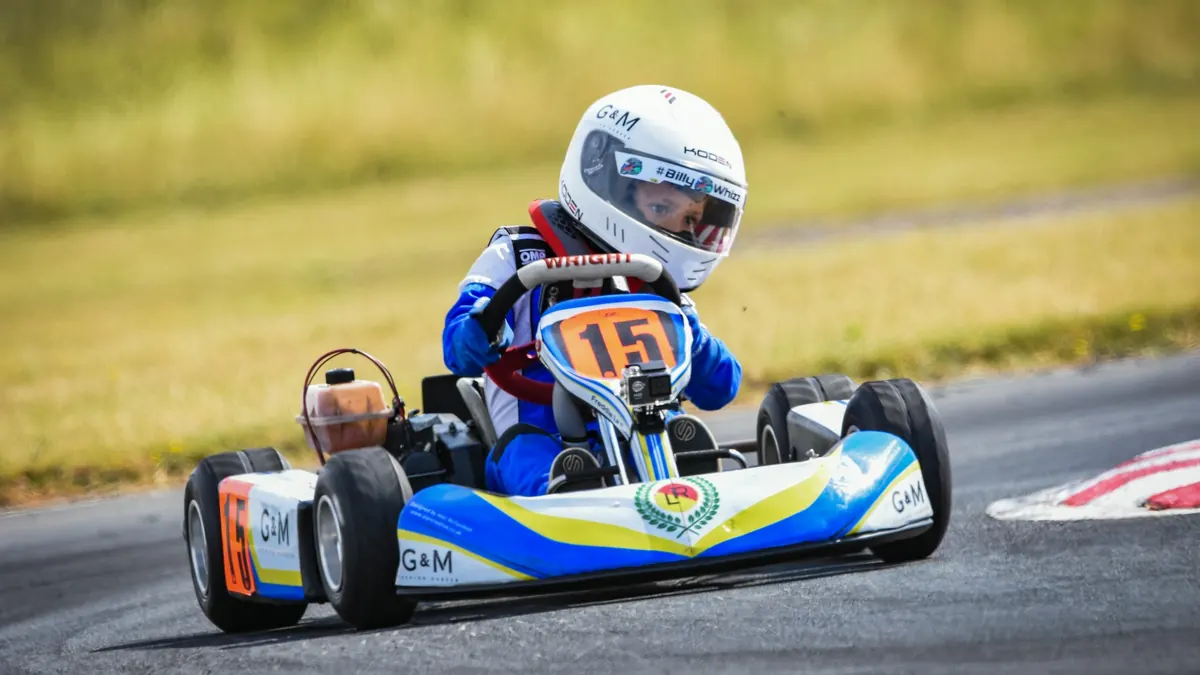
Your complete guide to introducing children to karting, from their first rental session to developing driving skills and exploring competitive racing.
Karting can be an exciting and rewarding activity for children and families. It introduces young drivers to vehicle control, concentration, responsibility, and the challenge of learning a new skill.
For some families, karting is simply a fun activity to enjoy together. For others, it becomes a regular hobby or the beginning of a journey into competitive motorsport.
However, parents who are unfamiliar with karting often have many questions.
How old does a child need to be? Is karting safe? Should children begin indoors or outdoors? How much does it cost? Does a child need special equipment? And how can parents determine whether their child is ready for racing?
The answers depend on the child’s age, physical abilities, interests, and the opportunities available locally.
This guide explains what parents should know before introducing their children to karting, how to choose a suitable starting point, and how to support their development without making unnecessary financial commitments.
1. Why Karting Can Be a Great Activity for Kids
Karting offers more than the excitement of driving a small racing vehicle.
When practiced in an appropriate environment, it can help children develop several useful skills.
Concentration and awareness
Driving a kart requires children to pay attention to the circuit, follow instructions, anticipate corners, and remain aware of other participants.
These activities encourage concentration and situational awareness.
Coordination and vehicle control
Children learn how steering, braking, and acceleration affect the movement of a vehicle.
With practice, they begin to understand the importance of smooth movements and precise timing.
Confidence and independence
Learning a new skill can be rewarding.
A child who initially feels uncertain may gradually become more comfortable as they understand the kart and the circuit.
Progress should be measured against the child’s own previous experience rather than the performance of other drivers.
Responsibility and respect
Karting involves rules that must be followed.
Young drivers learn to listen to instructions, respect other participants, understand track signals, and recognize that safety takes priority over speed.
Family involvement
Karting can also become a shared family interest.
Parents may participate as recreational drivers, attend events, help organize equipment, or support their child’s development.
Competitive karting can involve substantial family participation, particularly when children are too young to manage transportation, maintenance, and event preparation independently.
The most important consideration is that the child enjoys the experience. Karting should begin as an opportunity to learn and have fun, not as an obligation to compete.
2. What Age Can Kids Start Karting?
There is no single minimum age that applies to every karting facility.
Some centres offer junior karts or introductory programs designed for younger children. Others have higher age or height requirements.
Eligibility depends on factors such as:
- The child’s age and height.
- The type and size of kart.
- The ability to reach and operate the controls.
- The protective equipment available.
- The track layout and operating procedures.
- The facility’s insurance and safety requirements.
- The rules of the relevant racing organization, if competition is involved.
Young children
For younger children, the best introduction is usually a program specifically designed for their age and abilities.
Such programs may use lower-powered karts, smaller vehicles, separate driving sessions, or additional supervision.
Parents should never assume that a child is eligible simply because another facility allows children of a similar age to drive.
School-age children
As children grow, more rental karting options may become available.
At this stage, parents can focus on helping their children understand the controls, follow instructions, and become comfortable on the track.
Regular recreational sessions may also help determine whether the child has a sustained interest in karting.
Teenagers
Teenagers may be eligible for a wider variety of rental karting activities, leagues, and racing programs, depending on local rules.
For teenagers interested in competition, karting clubs can provide information about age-appropriate classes and entry requirements.
Age is not the only consideration
A child who meets the minimum age requirement may still need time to become comfortable.
Before booking, consider whether the child can:
- Reach the pedals and steering wheel properly.
- Understand and follow safety instructions.
- Remain attentive throughout the session.
- Communicate discomfort or uncertainty.
- Respect the instructions of track personnel.
There is no need to rush the process.
A positive first experience is more valuable than starting at the youngest possible age.
For a more detailed breakdown of starting ages, junior karting programs, minimum height requirements, and when children can begin racing, read our guide to what age kids can start karting.
3. Rental Karting or Competitive Karting: Where Should Kids Begin?
For most families who are new to karting, rental karting is the most practical starting point.
It allows children to discover the sport without requiring parents to purchase a kart or learn mechanical maintenance immediately.
Starting with rental karting
At a rental facility, the operator provides the kart, maintains the equipment, and organizes the sessions.
This significantly reduces the initial commitment.
Rental karting allows parents to observe whether their child:
- Enjoys driving.
- Feels comfortable in the kart.
- Understands and follows instructions.
- Wants to return for additional sessions.
- Shows an interest in learning and improving.
A few sessions can provide valuable insight before a family considers more structured participation.
Indoor versus outdoor karting
Both indoor and outdoor karting can be appropriate for children, provided the facility offers suitable equipment and operating procedures.
Indoor karting may provide convenient year-round access and relatively predictable conditions.
Outdoor karting can introduce different circuit layouts, longer straights, and changing track conditions.
The most important factor is not whether the circuit is indoors or outdoors, but whether the experience is suitable for the child’s age, size, and ability.
Electric versus gasoline-powered karts
Children may encounter electric or gasoline-powered rental karts.
Electric karts can offer electronically managed performance, while gasoline-powered karts provide a different mechanical and driving experience.
Neither should be selected solely because of its power source.
Parents should prioritize appropriate performance levels, kart fit, maintenance, and the quality of supervision.
For a more detailed explanation, read our guide to the different types of go-karts.
When should families consider competition?
Competition may become an option when a child demonstrates sustained interest and wants to develop beyond occasional recreational sessions.
Before making that transition, parents should understand the available racing classes, the time commitment, the financial requirements, and the expectations of organized events.
A rental karting league, where available and age-appropriate, can sometimes provide an intermediate step.
There is no requirement for a child to enter competitive karting to benefit from the sport.
4. How to Choose the Right Karting Facility for Your Child
Choosing the right facility is one of the most important decisions parents will make.
A good first experience should combine appropriate equipment, clear safety procedures, and an environment where children feel comfortable learning.
Questions to ask before booking
Contact the facility or review its published information to confirm:
- What are the minimum age and height requirements?
- Are junior karts available?
- Are children separated from adult drivers during sessions?
- What safety equipment is provided?
- Is there a briefing specifically designed for younger participants?
- Are instructors or supervisors available?
- How are incidents and stopped karts handled?
- Can parents observe the session?
- How long does each session last?
- Are reservations required?
Look for appropriate supervision
Young drivers should receive clear instructions before entering the circuit.
The facility should explain the controls, track signals, and expected behaviour.
Staff should be available to respond if a child becomes uncomfortable or experiences difficulty.
Make sure the kart fits
The child should be able to reach and operate the steering wheel and pedals comfortably.
A kart that is too large or poorly adjusted can make the experience difficult.
If the child cannot properly operate the controls, ask the facility about another kart or a more suitable program.
Consider the environment
Some children enjoy busy, competitive environments, while others may prefer a quieter introductory session.
Parents should consider their child’s personality and comfort level.
An introductory session with suitable supervision may be preferable to placing a complete beginner into an unfamiliar, fast-paced environment.
Finding karting opportunities
Families can begin by researching rental facilities, junior karting programs, and local karting clubs.
In Québec and elsewhere in Canada, opportunities vary by region and season.
DNA Karting is developing a directory of karting tracks, clubs, retailers, and service providers to help families discover suitable resources.
Until that directory is available, confirm all operating information and participation requirements directly with each facility.
5. Is Karting Safe for Children?
Safety is understandably one of the first concerns parents raise.
Karting is a motorsport, and like other activities involving moving vehicles, it carries risks. Collisions, loss of control, and injuries are possible even at organized facilities.
No track, kart, or piece of protective equipment can eliminate every risk.
However, choosing an appropriately operated facility, using suitable equipment, and following established procedures are important ways to manage those risks.
The importance of track rules
Children should understand that the track is a controlled environment with specific rules.
These may cover:
- Safe entry and exit.
- Following staff instructions.
- Respecting flags and warning signals.
- Maintaining awareness of other drivers.
- Avoiding intentional contact.
- Responding appropriately when a kart stops.
- Following overtaking rules.
Parents should reinforce that safety rules are not optional.
Protective equipment
Depending on the activity, children may need a helmet, appropriate clothing, gloves, footwear, and other protective equipment.
For rental karting, the facility commonly provides some or all of the mandatory equipment.
Competitive karting may have more specific requirements concerning equipment certification, design, and fit.
Proper helmet fit
A helmet should fit correctly and meet the requirements of the facility or racing organization.
Parents should not assume that any helmet used for another sport is suitable for karting.
If the facility provides helmets, ask staff to confirm the correct size and fit.
Physical comfort and fatigue
Karting can be physically demanding, particularly for inexperienced children.
Steering effort, vibration, heat, and concentration can contribute to fatigue.
Parents should pay attention if a child reports discomfort, pain, dizziness, or difficulty controlling the kart.
A child should not be pressured to continue a session when they are uncomfortable or unable to participate safely.
Safety in competitive karting
Competitive racing introduces additional considerations, including higher-performance equipment, closer racing, and event-specific technical regulations.
Parents should familiarize themselves with the rules of the relevant organization before purchasing equipment or entering an event.
For a detailed overview of protective gear, see our essential karting safety equipment guide.
6. Preparing Your Child for Their First Karting Session
A little preparation can help make the first experience more enjoyable.
Before the visit
Explain what karting involves in simple terms.
Children should understand that they will be driving a small vehicle on a track, following instructions, and sharing the circuit with other participants when applicable.
Avoid building unrealistic expectations about speed or performance.
What to bring
Requirements vary, but parents should generally consider:
- Comfortable clothing suitable for the facility.
- Secure, closed-toe shoes.
- Any required personal identification or booking confirmation.
- Water for before and after the session.
- Hair ties if needed.
- Any additional equipment specified by the operator.
Confirm the facility’s requirements before arriving.
During the safety briefing
Encourage your child to listen carefully and ask questions.
Make sure they understand how to accelerate, brake, steer, and respond to the facility’s signals.
If something is unclear, ask staff for an explanation before the session begins.
During the first laps
The objective should be to become familiar with the kart.
Children may initially drive cautiously, brake early, or take wide lines through corners.
This is a normal part of learning.
Parents should avoid expecting fast lap times or immediate confidence.
After the session
Ask open-ended questions:
- What was your favourite part?
- Was anything difficult or uncomfortable?
- Did you understand the instructions?
- Would you like to try again?
- What would you like to learn next time?
Listen to the child’s answers.
Some children will want to return immediately. Others may need more time or may decide karting is not for them.
Both responses are acceptable.
7. How Much Does Karting for Kids Cost?
The cost depends primarily on whether the child participates in rental karting or organized competition.
Recreational karting costs
For occasional rental sessions, families generally pay for track time.
Possible expenses include:
- Individual sessions.
- Multi-session packages.
- Optional memberships.
- Transportation.
- Personal protective equipment, if desired.
Some centres may offer junior-specific rates or programs.
Prices vary by facility, location, session duration, and type of kart.
Regular practice
If a child wants to drive frequently, costs may increase because of repeated sessions, travel, and optional coaching.
Parents should establish a realistic monthly budget before committing to a regular schedule.
More frequent driving can provide learning opportunities, but quality of practice is as important as quantity.
Competitive karting costs
Competition usually involves a much larger commitment.
Potential expenses include:
| Expense | Examples |
|---|---|
| Kart | Chassis and engine suitable for the racing class |
| Safety equipment | Helmet, suit, gloves, shoes, and required protection |
| Tires and consumables | Tires, fuel, lubricants, and replacement parts |
| Maintenance | Mechanical servicing, repairs, and engine work |
| Race entries | Event and championship registration |
| Licences and memberships | Requirements of the governing organization |
| Transportation | Vehicle or trailer arrangements |
| Travel | Accommodation, meals, and transportation |
| Practice | Track access and testing |
| Coaching | Optional driver development |
| Storage and tools | Equipment needed to maintain and store the kart |
The cost can vary substantially according to the class, level of competition, number of events, and support arrangements.
Start with a realistic budget
Before purchasing a racing kart, parents should understand the full expected cost of participation.
A kart’s purchase price is only one part of the budget.
Unexpected repairs and replacement parts can also affect the total.
For a more detailed breakdown, read our guide to karting costs in Québec.
Does a child need expensive equipment to improve?
Not necessarily.
For a child who is still exploring the sport, additional rental sessions or appropriate instruction may be more useful than purchasing equipment prematurely.
The goal is to make financial commitments gradually as the child’s interest and needs become clearer.
8. Helping Your Child Improve Their Karting Skills
Children can develop karting skills through practice, observation, and appropriate instruction.
Progress should be gradual and adapted to the child’s experience.
Start with control, not speed
Early sessions should focus on understanding the controls, following the circuit, and maintaining awareness.
Once the child becomes comfortable, they can begin improving consistency.
Teach the importance of looking ahead
Young drivers sometimes focus too closely on the area immediately in front of the kart.
Encourage them to look toward the next corner and the direction they want to travel.
This helps them anticipate what comes next.
Encourage smooth steering
Excessive steering can make the kart unstable or slow it down.
With practice, children can learn to make more deliberate movements.
Develop braking habits
Learning when to reduce speed before a corner is an important part of kart control.
Children should understand that entering every corner as fast as possible is not the objective.
Focus on consistency
Instead of celebrating only the fastest lap, recognize improvements in control and repeatability.
A child who drives several smooth laps may be developing stronger fundamentals than one who produces a single fast lap followed by repeated mistakes.
Avoid excessive pressure
Not every session needs to produce a faster lap time.
Children may progress at different rates, and enjoyment is an important part of maintaining motivation.
Parents can help by recognizing effort, concentration, and improvement rather than focusing exclusively on results.
For a deeper explanation of braking, racing lines, cornering, and consistency, explore our complete guide to karting driving techniques.
9. When Should Parents Consider Karting Lessons or Coaching?
Coaching can be useful when a child enjoys karting and wants to improve.
However, it is not necessary for every recreational participant.
Benefits of coaching
An experienced instructor can help identify driving habits that may be difficult for parents or young drivers to recognize.
Coaching may focus on:
- Basic kart control.
- Track awareness.
- Braking points.
- Racing lines.
- Steering technique.
- Consistency.
- Safe interaction with other drivers.
- Preparation for competition.
Choosing a suitable instructor
Parents should look for an instructor or program with relevant karting experience and an approach appropriate for the child’s age and ability.
Ask about the structure of the sessions, supervision, equipment, and expected learning objectives.
A good introductory program should prioritize fundamentals and safe driving rather than promising immediate race-winning performance.
When is coaching worthwhile?
Coaching may become more useful when a child has completed several sessions, enjoys the activity, and expresses a desire to improve.
For families considering competitive karting, instruction can also help clarify the skills and preparation required.
10. From Rental Karting to Competitive Racing
Some children become interested in racing after gaining experience with rental karts.
The transition to competition can be exciting, but it requires planning.
Step 1: Confirm the child’s interest
Before making major commitments, determine whether the child genuinely wants to participate in organized racing.
Interest in an occasional rental session does not necessarily mean a child will enjoy the demands of competition.
Racing can involve early mornings, travel, practice, mechanical preparation, and challenging results.
Step 2: Visit a karting event
Attending a race as a spectator is an excellent way to learn.
Parents and children can observe the different categories, speak with participants, and understand how events are organized.
This may also provide an opportunity to meet local clubs and service providers.
Step 3: Learn about the racing classes
Karting competitions are organized into categories with specific eligibility and technical requirements.
These may depend on age, engine type, chassis, and other factors.
Parents should review current regulations before choosing equipment.
Step 4: Understand the family’s commitment
For young drivers, competitive karting often becomes a family project.
Parents may need to organize transportation, registration, equipment, maintenance, and scheduling.
Some families manage these responsibilities independently, while others obtain support from mechanics, teams, or karting shops.
Step 5: Research equipment before purchasing
Buying a kart before understanding the intended racing class can lead to expensive mistakes.
Consult experienced participants, reputable suppliers, and event organizers before making a purchase.
Step 6: Begin with realistic expectations
A child’s first season of racing should focus on learning the procedures, understanding competition, and developing skills.
Results may vary, and setbacks are part of motorsport.
For more information about the transition into organized racing, read our step-by-step guide to starting kart racing in Québec.
11. Should You Buy Your Child a Racing Kart?
For most families, purchasing a racing kart should come after exploring rental karting and understanding the available competitive options.
Kart ownership introduces responsibilities beyond driving.
Questions to answer before buying
Consider the following:
- Does my child want to participate regularly?
- Which racing class is appropriate?
- What equipment is permitted in that class?
- Where will we practice?
- How will we transport the kart?
- Where will we store it?
- Who will handle maintenance?
- What is our annual budget?
- Are parts and technical support available locally?
- How much time can our family realistically commit?
New versus used equipment
A used kart may reduce the initial cost, but parents should consider its condition, maintenance history, and compatibility with current rules.
A less expensive kart can become costly if major repairs are needed.
Before purchasing, consider obtaining an inspection or advice from someone familiar with the equipment and category.
The value of local support
A knowledgeable club, karting shop, or mechanic can help families understand equipment requirements and maintenance needs.
This support can be particularly valuable during the first season.
The goal is to choose equipment appropriate for the child’s category and development, not simply to purchase the fastest or most expensive kart available.
12. How Parents Can Support Their Child’s Karting Journey
Parents play an important role in shaping a child’s experience.
Their approach can influence whether karting remains enjoyable and sustainable.
Keep the experience positive
Encourage learning, effort, and good sportsmanship.
Celebrate improvements in concentration, confidence, and control.
Avoid treating every session as a competition.
Set realistic goals
Goals should match the child’s age, experience, and interests.
For a beginner, completing a session comfortably may be an important achievement.
For a more experienced driver, improving consistency or understanding a difficult corner may be a useful objective.
Respect the child’s pace
Some children become enthusiastic immediately.
Others need time to feel comfortable.
Avoid pushing a child into more advanced equipment or competition before they are ready.
Teach good sportsmanship
Karting provides opportunities to learn how to handle success, disappointment, and competition.
Encourage children to respect other drivers, officials, instructors, and team members.
Mistakes and difficult results should be treated as opportunities to learn.
Manage the family budget
Set financial boundaries before making significant commitments.
Karting can become expensive, particularly at competitive levels.
A clear budget helps families make decisions without unnecessary pressure.
Maintain balance
Karting should fit within the child’s broader life, including school, friendships, rest, and other interests.
A healthy balance can help maintain enthusiasm over time.
13. A Simple Three-Month Introduction to Karting for Kids
Families who want a structured introduction can use the following plan.
The timeline is flexible and should be adjusted to the child’s age, interests, and availability.
Month 1: Discover karting
Goal: Build comfort and enjoyment.
Find a suitable rental facility and book an introductory session.
Explain the basic rules and allow the child to become familiar with the kart.
Afterward, discuss what they enjoyed and whether they want to return.
If the child is interested, consider another session.
Month 2: Develop confidence
Goal: Improve basic control and consistency.
Return to a familiar circuit.
Encourage the child to focus on smooth driving, awareness, and following instructions.
Avoid placing excessive emphasis on lap times.
If appropriate, consider a beginner lesson or introductory program.
Month 3: Explore the possibilities
Goal: Decide what comes next.
Depending on the child’s interests, consider:
- Continuing occasional rental karting.
- Practicing more regularly.
- Trying another suitable circuit.
- Exploring a junior karting program.
- Attending a kart race as a spectator.
- Speaking with a local karting club.
- Learning about introductory competition opportunities.
There is no need to make a major financial commitment at the end of three months.
The purpose of the plan is to discover whether karting is an activity the child and family genuinely enjoy.
14. Frequently Asked Questions About Karting for Kids
What is the best age for a child to start karting?
There is no universal best age.
The appropriate starting point depends on the child’s physical abilities, maturity, and the programs available.
Always check the facility’s minimum age and height requirements.
Is karting safe for young children?
Karting involves risks, including collisions and injuries.
Parents should choose a suitable facility with appropriate equipment, clear safety procedures, and supervision.
No motorsport activity is completely risk-free.
Does my child need a driver’s licence?
Rental karting facilities generally establish their own participation requirements.
A road driver’s licence is often not required, but parents should confirm the operator’s rules.
Competitive karting may require a separate motorsport licence.
Does my child need a helmet?
A helmet is normally required, but many rental facilities provide one.
Check the facility’s equipment policy and ensure the helmet fits properly.
Is electric karting better for children?
Not necessarily.
Suitability depends on the kart’s performance, size, controls, and the facility’s procedures.
Both electric and gasoline-powered karts can be used in age-appropriate programs.
How much does junior kart racing cost?
Costs vary considerably according to the category, equipment, events, maintenance, and travel.
Families should research a complete season budget rather than focusing only on the purchase price of a kart.
Should my child start with rental karting?
For most families unfamiliar with the sport, rental karting is a practical way to begin.
It allows children to experience karting before the family makes a significant equipment investment.
Can girls participate in karting?
Absolutely.
Karting is open to girls and boys who meet the applicable participation requirements.
Facilities and clubs can provide information about available programs and categories.
Does my child need to race competitively to improve?
No.
Children can develop driving skills through recreational karting, regular practice, and appropriate instruction without participating in formal championships.
Can karting lead to professional motorsport?
Karting is a common early discipline for drivers who later participate in other forms of motorsport.
However, professional racing is highly competitive and typically requires substantial resources, experience, and opportunities.
Families should approach karting as a worthwhile activity in its own right rather than assuming it will lead to a professional career.
Final Thoughts: Helping Your Child Discover Karting
Karting can be a memorable experience for children and parents.
It offers opportunities to develop concentration, coordination, confidence, and respect for rules while discovering an exciting form of motorsport.
The best way to begin is usually simple: find a suitable rental karting facility, confirm the participation requirements, and let your child experience the sport without pressure.
If your child enjoys karting, you can gradually explore regular practice, coaching, junior programs, and eventually competition.
There is no single correct path.
Some children will enjoy karting as an occasional family activity. Others may become passionate about racing.
Both experiences can be rewarding.
Start with enjoyment, prioritize safety, encourage learning, and allow your child’s interest to guide the journey.
Continue Learning with DNA Karting
If you’re new to the sport yourself, start with our complete beginner’s guide to karting, which explains the different types of karting, first sessions, driving fundamentals, costs, equipment, and the path into racing.
At DNA Karting, we’re building resources to help families discover the sport, find relevant businesses and facilities, understand equipment choices, and learn from real karting experiences.
Whether your child is preparing for a first rental session or dreaming of a first race, our goal is to help your family make informed decisions and enjoy the journey.
Every karting journey begins with a first experience. Make it a positive one.