



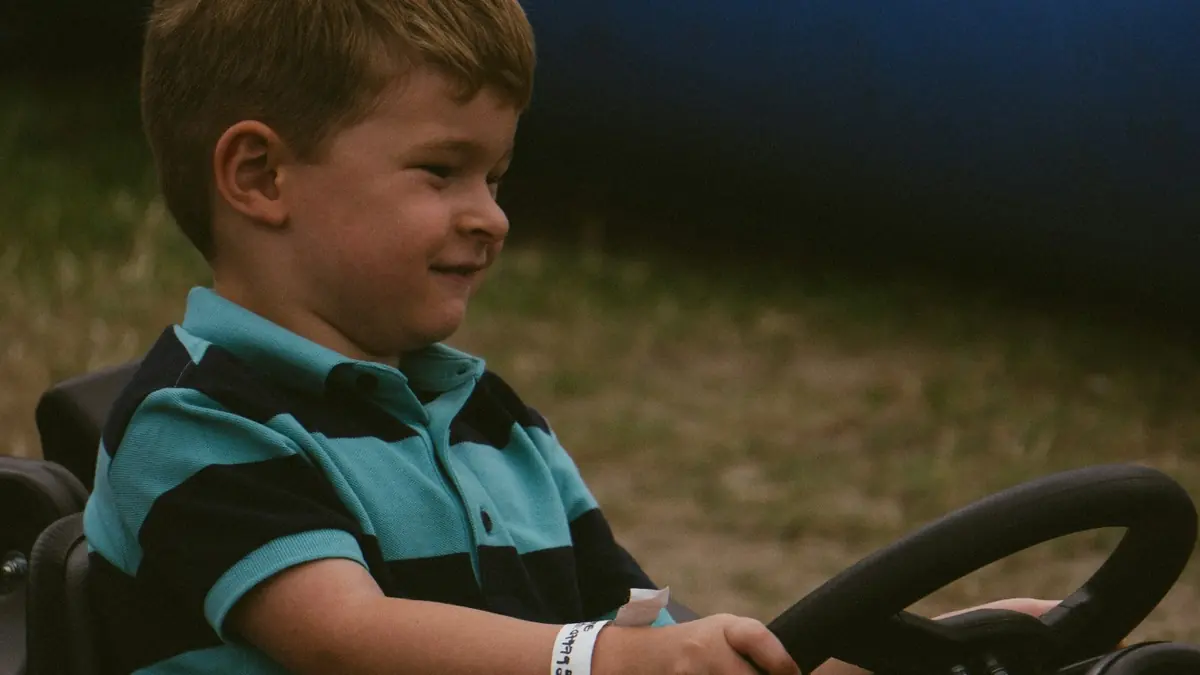
Karting can be an exciting family activity, giving children the opportunity to discover driving in a controlled environment while developing confidence, coordination, and an appreciation for motorsports.
However, not every karting facility is designed for young drivers.
Some tracks primarily serve adults, while others offer junior karts, dedicated family sessions, or structured programs specifically developed for children.
Choosing the right karting track is one of the most important steps toward creating a positive first experience for your child.
This guide explains what parents should look for when comparing karting facilities, including age requirements, safety standards, kart types, supervision, pricing, and the overall family experience.
1. Check the Minimum Age and Height Requirements
Before choosing a karting facility, verify whether your child meets its participation requirements.
Karting centres generally establish minimum age and height restrictions based on the types of karts they operate and their safety procedures.
These requirements can vary considerably between facilities.
Some centres offer smaller karts specifically designed for children, while others operate only full-size rental karts intended for older participants.
When reviewing a facility’s website, look for:
- Minimum age requirements
- Minimum height requirements
- Maximum height or weight restrictions, if applicable
- Junior kart availability
- Whether younger children require parental supervision
- Whether age restrictions differ between kart types
Important: Meeting the minimum age requirement does not necessarily mean that a child is physically or emotionally ready to drive.
Children should be able to understand instructions, reach the controls comfortably, and respond appropriately to staff directions.
For additional guidance, read At What Age Can Kids Start Karting? A Parent’s Guide.
2. Look for Karts Designed for Children
The type of kart available is an important consideration.
Adult rental karts may be too large, heavy, or powerful for younger drivers.
Facilities that welcome children may offer several options.
Junior rental karts
Junior rental karts are generally smaller and designed to accommodate younger drivers.
They may feature:
- Reduced engine power or speed settings
- Adjustable seats or pedals
- Protective bodywork
- Controls adapted to smaller drivers
Electric junior karts
Some indoor karting facilities use electric karts with adjustable performance settings.
These systems may allow operators to limit acceleration or speed according to the driver’s experience.
Two-seater karts
Certain recreational facilities offer two-seater karts that allow a child to ride with an adult driver.
These can provide an introduction to the sensations of karting without requiring the child to operate the vehicle independently.
Availability varies, and not every track offers these options.
To understand the differences between kart types, see Types of Go-Karts Explained: Rental, 4-Stroke, 2-Stroke & Electric Karts.
3. Evaluate the Facility’s Safety Procedures
Safety should be a primary consideration when selecting a karting track for children.
Both indoor and outdoor karting involve risks, including collisions, sudden braking, and contact with barriers.
A well-organized facility should have clear procedures for managing these risks.
Parents should look for:
- Mandatory safety briefings
- Properly fitted helmets
- Clearly communicated driving rules
- Staff supervising the track
- Suitable protective barriers
- Regular kart maintenance
- Procedures for responding to incidents
- Age-appropriate speed and performance settings, where available
You can also ask whether the facility separates younger drivers from adults or more experienced participants.
A facility that clearly explains its safety procedures is generally a better choice than one that provides little information about supervision or equipment.
For more information about protective equipment, consult Essential Karting Safety Equipment: Helmets, Suits, Gloves, Rib Protectors and What Beginners Need.
4. Ask Whether Children Have Dedicated Track Sessions
Some karting facilities allow children and adults to drive together, while others organize separate sessions based on age, kart type, or experience.
For a young beginner, a dedicated junior session can be particularly helpful.
Potential advantages include:
- Drivers with more similar experience levels
- Karts with comparable performance
- Less pressure from faster adult drivers
- Staff instructions tailored to younger participants
- A more comfortable environment for learning
However, separate junior sessions are not universally available.
Before booking, ask the facility how it organizes sessions involving children.
If your child is nervous about driving for the first time, consider choosing a quieter session with fewer participants.
5. Indoor or Outdoor Karting: Which Is Better for Families?
Both indoor and outdoor karting can provide enjoyable family experiences.
The better choice depends on the facility, the season, and your child’s preferences.
Indoor karting
Indoor karting can be particularly convenient for families because it is generally unaffected by weather conditions.
Many indoor centres offer:
- Year-round availability
- Electric rental karts
- Waiting areas for spectators
- Birthday party packages
- Organized group sessions
In Québec, indoor karting is especially practical during the winter months.
Outdoor karting
Outdoor facilities may offer longer circuits, varied layouts, and a more traditional open-air karting experience.
Some also provide junior programs, driving lessons, or opportunities to discover competitive karting.
However, weather conditions and seasonal opening periods can affect availability.
Neither indoor nor outdoor karting is automatically safer or better for children. The most important factors are suitable karts, appropriate supervision, and clear safety procedures.
6. Consider Your Child’s Confidence and Experience
Every child approaches new activities differently.
Some are enthusiastic about driving immediately, while others may feel uncertain about the noise, speed, or unfamiliar surroundings.
Before booking, consider whether your child:
- Enjoys activities involving speed and movement
- Can follow instructions from unfamiliar adults
- Is comfortable wearing a helmet
- Can remain focused during a driving session
- Understands the importance of respecting rules
- Is interested in driving independently
If your child is hesitant, avoid creating unnecessary pressure.
Watching a session from the spectator area can help them become familiar with the activity before participating.
A shorter introductory session or a two-seater kart, where available, may also be an appropriate starting point.
The goal should be to build confidence rather than achieve a particular lap time.
7. Compare Track Layouts and Driving Conditions
The configuration of the track can influence the experience.
Some circuits feature tight corners and frequent direction changes, while others offer wider layouts and longer straightaways.
For younger beginners, look for a facility that provides a manageable driving environment and clear instructions.
Questions worth asking include:
- Is the track suitable for junior drivers?
- Are there dedicated junior sessions?
- Are speed limits adjusted for younger participants?
- Is the circuit supervised throughout the session?
- Are beginners introduced to the track before driving?
A longer or faster circuit is not necessarily better for a child.
The most suitable track is one that matches the child’s abilities and allows them to develop confidence gradually.
8. Check the Availability of Safety Equipment
Most recreational karting facilities provide helmets, but parents should confirm exactly what is included.
Ask whether the facility offers helmets in appropriate children’s sizes and whether staff help ensure a proper fit.
Other considerations include:
- Closed-toe footwear requirements
- Helmet liners or balaclavas
- Long-hair requirements
- Clothing restrictions
- Additional protective equipment, if required
Avoid bringing loose clothing or accessories that could interfere with the kart’s controls.
If your child already owns karting equipment, ask whether personal equipment is permitted and what standards it must meet.
9. Compare Prices and Family Packages
Karting prices vary depending on the facility, session duration, location, and kart type.
Some centres offer individual sessions, while others provide family packages, multi-race discounts, or birthday party options.
When comparing prices, consider:
- The cost per child
- The duration of each driving session
- Whether safety equipment is included
- Family or group discounts
- Additional registration fees
- Reservation requirements
- Cancellation policies
- Whether spectators can attend without charge
The lowest advertised price does not always represent the best value.
A facility offering appropriate junior karts, attentive supervision, and a well-organized experience may justify a higher price.
For Québec-specific information, read How Much Does Karting Cost in Québec? The Complete Beginner’s Guide.
10. Look for Family-Friendly Facilities
The overall experience matters, especially when younger children or non-driving family members are involved.
A family-friendly karting centre may offer:
- Comfortable spectator areas
- Clean washrooms
- Accessible parking
- Food or refreshments
- Birthday party facilities
- Clear schedules and reservation procedures
- Staff experienced in working with children
Consider whether younger siblings can comfortably watch while others participate.
If you’re planning a family outing, it may also be worth checking whether the facility offers activities suitable for different age groups.
11. Read Reviews and Contact the Facility
Online reviews can provide useful insights into the experiences of other families.
Look for comments discussing:
- Staff professionalism
- Safety briefings
- Junior kart availability
- Equipment condition
- Organization of sessions
- Cleanliness
- Waiting times
- How staff interact with children
Keep in mind that individual reviews may not reflect every visitor’s experience.
If important information is missing from the website, contact the facility directly.
A few questions before booking can help prevent disappointment on the day of your visit.
12. Questions to Ask Before Booking
Use this checklist when contacting a karting facility.
- What is the minimum age and height for children?
- Do you offer junior karts?
- Are there dedicated sessions for younger drivers?
- Can children and adults drive together?
- What safety equipment is included?
- Are helmets available in children’s sizes?
- How long does each session last?
- Do staff provide instructions for first-time drivers?
- Can parents watch from a spectator area?
- What happens if a child decides not to participate?
- Do you offer family packages or birthday party options?
You don’t necessarily need to ask every question, but the answers should help you assess whether the facility is suitable for your family.
13. Preparing Your Child for Their First Karting Experience
Once you’ve selected a facility, a little preparation can make the experience more enjoyable.
Explain to your child what will happen during the visit.
Describe the safety briefing, helmet fitting, kart controls, and the importance of listening to staff.
Encourage your child to ask questions if anything is unclear.
On the day of the visit:
- Arrive early enough to avoid rushing.
- Dress your child in comfortable clothing and closed-toe shoes.
- Make sure they understand the basic safety rules.
- Encourage them to start slowly.
- Focus on enjoyment rather than performance.
For a step-by-step overview of a typical session, read What to Expect at Your First Rental Karting Session.
14. What if Your Child Wants to Continue Karting?
A positive first rental karting experience may lead to an ongoing interest in the sport.
Some children enjoy occasional recreational sessions, while others become interested in developing their driving skills or participating in organized competition.
If your child wants to continue, consider:
- Returning to the same facility for additional practice
- Exploring beginner driving lessons
- Asking about junior karting programs
- Visiting a local karting club
- Learning about competitive karting categories
- Understanding the costs of regular participation
For a broader introduction, explore our Karting for Kids & Parents guide.
If your family is considering competitive racing, our How to Start Kart Racing in Québec article explains the main steps involved.
Final Thoughts: Choosing the Right Karting Track for Your Family
Karting can be a memorable activity for children and parents, but choosing the right facility makes a significant difference.
Rather than selecting a track based only on price, speed, or location, consider the quality of the supervision, the availability of suitable junior karts, and the overall experience offered to families.
The best karting track for your child is one that provides age-appropriate equipment, clear safety procedures, and an enjoyable introduction to driving.
Start with a facility that matches your child’s abilities and interests.
With the right preparation and environment, a first karting session can become the beginning of a lasting enthusiasm for motorsports.
Continue Exploring Karting for Families
Discover more practical advice and educational resources in our Recreational Karting section.
